

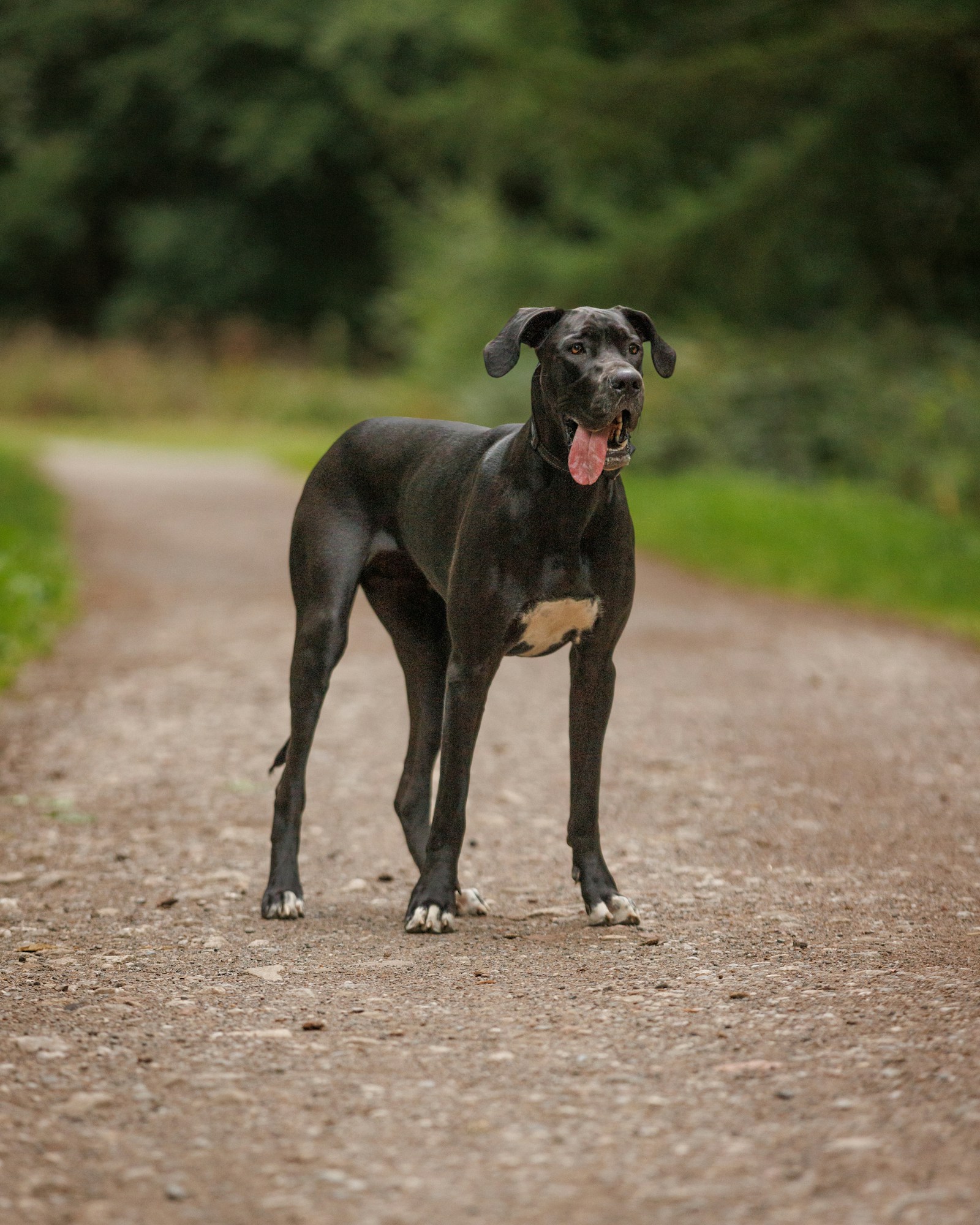
A large dog breed weight chart only helps if you also know what to do with the number. Adult weight for large and giant breeds swings enormously, from a 50-lb German Shepherd to a 200-lb Mastiff, and gear that fits one of those dogs will not fit the other. Below is a sourced chart of adult weight ranges for 29 large and giant breeds, plus a weight-class breakdown showing roughly what crate, bed, collar and pool size each range typically calls for, and links to the site’s own detailed guides for the categories where weight alone is not enough.
Weight ranges are sourced from the American Kennel Club’s own breed weight chart, current as of this writing. AKC breed standards describe a target range, not a guarantee; individual dogs, especially mixed breeds, can fall outside it.
Large & Giant Dog Breed Weight Chart
Sorted heaviest to lightest by the top of each breed’s range. “Large” generally starts around 50 lbs; most trainers and vets informally call anything regularly topping 100 lbs a “giant” breed, though it is not an official AKC category.
| Breed | Adult weight range |
|---|---|
| Mastiff | 120-230 lbs |
| Spanish Mastiff | 140-200 lbs |
| Pyrenean Mastiff | 120-190 lbs |
| Great Dane | 110-175 lbs |
| Saint Bernard | 120-180 lbs |
| Caucasian Shepherd Dog | 99-170 lbs |
| Leonberger | 90-170 lbs |
| Tibetan Mastiff | 70-150 lbs |
| Newfoundland | 100-150 lbs |
| Neapolitan Mastiff | 110-150 lbs |
| Anatolian Shepherd Dog | 80-150 lbs |
| Greater Swiss Mountain Dog | 85-140 lbs |
| Rottweiler | 80-135 lbs |
| Bullmastiff | 100-130 lbs |
| Black Russian Terrier | 80-130 lbs |
| Akita | 70-130 lbs |
| Irish Wolfhound | 105-120 lbs |
| Cane Corso | built proportionate to height, typically 85-120 lbs |
| Kuvasz | 70-115 lbs |
| Bernese Mountain Dog | 70-115 lbs |
| Dogue de Bordeaux | 99-110 lbs |
| Komondor | 80-100 lbs |
| Great Pyrenees | 85-100 lbs |
| Doberman Pinscher | 60-100 lbs |
| German Shepherd Dog | 50-90 lbs |
| Alaskan Malamute | 75-85 lbs |
| Rhodesian Ridgeback | 70-85 lbs |
| Labrador Retriever | 55-80 lbs |
| Golden Retriever | 55-75 lbs |
Gear Sizing by Weight Class
These are starting points, not final answers. Two dogs at the same weight can have very different builds: a lean 90-lb Doberman and a barrel-chested 90-lb Bulldog need different gear even though the chart above would put them in the same weight band. Use the ranges below to narrow down a size, then check the specific product’s own chart before buying, exactly as our harness sizing guide recommends for harnesses specifically.
| Weight class | Typical crate length | Typical bed size | Typical collar (neck) | Typical pool diameter |
|---|---|---|---|---|
| 50-60 lbs | ~36 in | Large (~40-44 in) | ~16-20 in | ~55-60 in |
| 60-80 lbs | ~36-42 in | Large/XL (~44-48 in) | ~18-22 in | ~55-63 in |
| 80-100 lbs | ~42 in | XL (~48 in) | ~20-24 in | ~63 in |
| 100-150 lbs | ~48 in | XXL (~50-55 in) | ~22-28 in | ~63-67 in |
| 150+ lbs | ~54 in (largest commercial size) | 55+ in, or two beds pushed together | ~26-30+ in | 67+ in, or a rectangular multi-dog pool |
Crates: add roughly 4-6 inches to your dog’s nose-to-tail length so they can lie down fully stretched out and turn around without their nose or tail touching a wall. See our large dog crate picks and, if you are weighing whether a crate is the right setup at all, how long a dog can reasonably stay in one.
Beds: measure your dog lying on their side, nose to tail, and add a few inches of margin, then compare against our large dog bed picks. A dog that has to curl up to fit is a sign the bed is too small.
Harnesses: do not size by weight at all. Chest girth is the number that matters, and our harness sizing guide walks through exactly how to measure it before you shop our harness picks.
Collars: the neck-size ranges above are a rough starting point pulled from common manufacturer sizing, not a breed standard. Measure your dog’s neck where a collar sits and leave room for two fingers between the collar and the skin, then check our collar picks.
Pools: giant breeds and multi-dog households usually outgrow round pools under 63 inches. See our dog pool picks for options at each size.
Food: portion size tracks weight more directly than most gear does. Our large dog feeding guide breaks down daily cups by the same weight bands used above, alongside bowl recommendations in our dog bowl and slow-feeder bowl picks.
Try It: What Size Gear Does My Dog Need?
Enter your dog’s weight to jump straight to the row above, with links to the matching product guides.
Frequently Asked Questions
How much should a large dog breed weigh?
It depends entirely on the breed. AKC breed standards put large and giant breeds anywhere from roughly 50 lbs (German Shepherd, on the low end) to over 200 lbs (Mastiff, Spanish Mastiff), so “large dog” covers a wider spread than most people expect. Check the chart above for your specific breed rather than relying on a single large-dog average.
Should I size gear by my dog’s weight or by measuring?
Measure whenever the product lets you. Weight-based sizing works reasonably well for crates, beds and pools, where a few inches of slack rarely matters. It works poorly for harnesses, where chest girth is the number that actually determines fit; see our harness sizing guide for the full method.
What is considered a giant dog breed versus a large dog breed?
There is no official AKC line between the two. Informally, most trainers and vets use “giant breed” for dogs that regularly top 100 lbs as adults, like the Great Dane, Mastiff, Saint Bernard and Newfoundland. Everything from about 50 to 100 lbs, like Labradors, Golden Retrievers and German Shepherds, is usually just called “large.”
Why do two dogs of the same weight need different gear sizes?
Build varies a lot even within the same weight. A lean, long-legged 90-lb dog and a stocky, barrel-chested 90-lb dog can need different harness girths, different bed lengths and different crate depths despite matching on the scale. Treat every weight-based number on this page as a starting point to measure against, not a final answer.
Final Thoughts
Weight tells you the ballpark. It does not replace a tape measure, and it especially does not replace one for a harness. Use the breed chart to see where your dog sits among other large and giant breeds, use the weight-class table or the calculator above to get a starting size for crates, beds, collars and pools, and then confirm the final size against whichever specific product you are buying. If you would rather answer a couple of quick questions and get a shortlist across every category at once, the Big Dog Gear Finder pulls from these same guides.
- 50-100 lbs covers most “large” breeds: Labradors, Golden Retrievers, German Shepherds, Rottweilers.
- 100-150 lbs is where “giant breed” gear starts, for dogs like Newfoundlands and Leonbergers.
- 150+ lbs means checking that a crate, bed or pool actually publishes a size that fits, since not every product line goes that large.
- Harnesses are the one category weight cannot size, measure chest girth instead.
For more on setting up a home around a large dog, see our guides on apartment setup for big dogs and which large breeds actually do well in an apartment.