
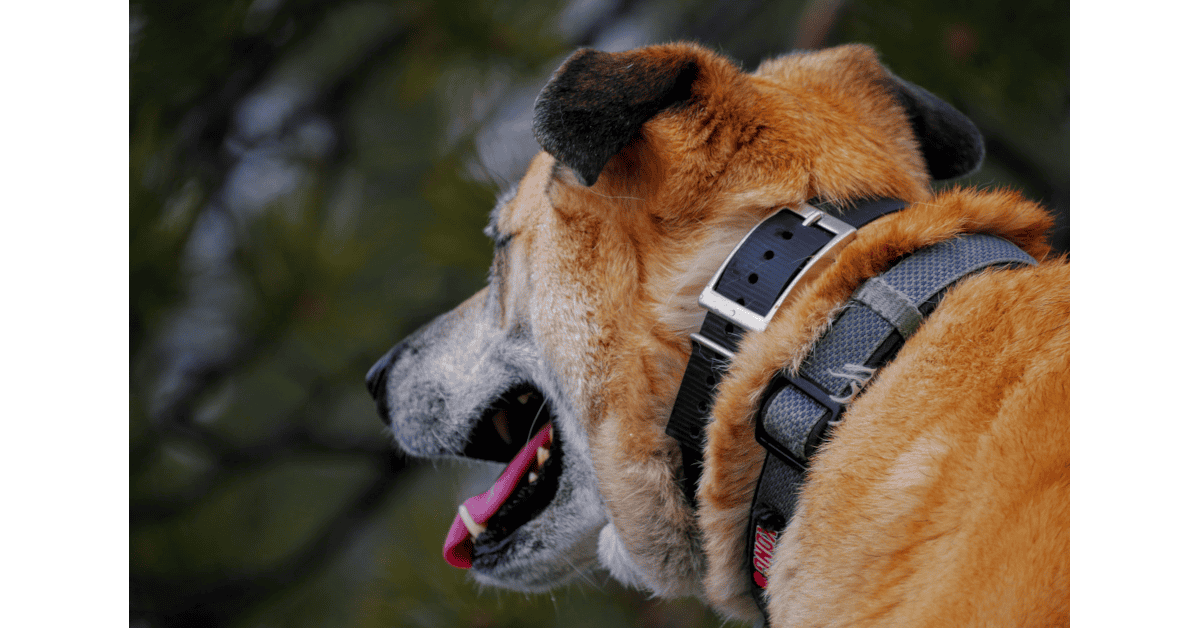
The best dog collars for large dogs spread pressure across a wide, soft band and close with hardware that will not pop under a hard pull. Our top pick is the Ruffwear Front Range Collar for everyday wear; if your dog backs out of collars, a martingale like the Country Brook Petz is the safer choice. Below are five picks for big dogs, each with the exact size to buy.
Amazon Associate disclosure: As an Amazon Associate we earn from qualifying purchases. This post contains Amazon affiliate links; if you click and buy, we may earn a small commission at no extra cost to you. See our Disclosures page for details.
Price tiers last checked: October 3, 2026. Tiers compare the picks in this guide, not the whole market. Use any Check Price link for the current price on Amazon.
Recent updates (3 Oct 2026): we re-checked every pick against its current Amazon listing, added the Spark Paws tactical collar, switched the Black Rhino link to the XL because the Large is not listed right now, and moved Country Brook to its main heavy-duty listing.
How we compared: we read the maker specs and retailer listings for each collar and checked the size options for big necks. We do not test products hands-on; see how we research.
Unsure what neck size to expect? Our large dog breed weight chart has typical collar sizes by weight class.
Dog Collars for Large Dogs at a Glance
| Pick | Type | Large-dog size | Price tier | Best for |
|---|---|---|---|---|
| 1. Ruffwear Front Range | Flat, side-release | 20-26 in | Mid-range | Everyday wear |
| 2. Black Rhino Comfort | Flat, padded | XL 23-27 in | Budget | Sensitive skin, swimmers |
| 3. Country Brook Petz | Martingale, no buckle | L 18-26 in, 1 in wide | Mid-range | Escape artists |
| 4. Wolfgang Martingale | Martingale with buckle | L 18-22 in, 1 in wide | Premium | Slip resistance with a buckle |
| 5. Spark Paws Tactical | Tactical, padded, handle | L 21-26 in, 2 in wide | Mid-range | Strong dogs, training |
Why Big Dogs Need the Right Collar
For large dogs, the wrong collar can mean:
- Neck strain or trachea irritation from thin or poorly placed collars.
- Rubbing and hot spots under cheap, stiff webbing.
- Slip-outs when a nervous or excited dog backs up suddenly.
- Hardware failures (buckles or D-rings) right when you need control most.
A good large-dog collar should:
- Sit high enough on the neck (not sagging near the shoulders).
- Use strong hardware that won’t bend or pop.
- Have enough width and padding to spread pressure comfortably.
- Offer a secure fit that doesn’t easily slip over the head.
It also needs to work alongside the rest of your setup. If your dog is a strong puller, pairing a good collar with a properly fitted harness and sturdy leash will be safer and more comfortable than relying on the collar alone.
Types of Dog Collars for Large Dogs
Before we get into specific products, it helps to know the main collar types you’ll see for big dogs. For an overview of common collar types and how they fit, see this guide on which type of dog collar is best for your dog.
Flat buckle collars (everyday use)
Flat buckle collars are the classic “everyday” collar most dogs wear. They’re great for ID tags and calm walkers, and many big dogs do just fine with a quality flat collar.
Look for:
- At least 1″ width (often 1.5″ for giant breeds).
- Strong buckle (metal or heavy-duty plastic) that won’t pop under tension.
- Soft webbing or padding against your dog’s neck.
- Reflective stitching if you walk at night.
Best for: calm walkers and everyday ID tags. Example pick: the Ruffwear Front Range.
Martingale collars (for escape artists)
Martingale collars use a limited-slip loop that tightens slightly when your dog pulls and loosens when they relax. They’re especially useful for dogs with narrow heads, thick necks, or a talent for backing out of flat collars.
When fitted correctly, martingales are designed to prevent slip-outs without choking. They’re a good match for many large dogs who pull or try to escape, especially when paired with a harness for extra control.
Best for: dogs that back out of flat collars. Example picks: the Country Brook Petz and the Wolfgang Martingale.
Tactical collars (for strong, muscular dogs)
Tactical collars are wider, usually around 2 inches, with heavy buckles and a grab handle on top. The extra width spreads pressure on powerful breeds, and the handle gives you close control at the vet or when another dog passes. They are bulkier than a flat collar, and for a dog that pulls on every walk, a front-clip harness is still the better tool.
Best for: strong dogs and training. Example pick: the Spark Paws Tactical.
What we avoid for most pet homes
For everyday pet dogs, we steer clear of choke chains, prong collars, and shock collars as “normal” walking tools. They’re sometimes used in specific training contexts with professional guidance, but for most large dog families, a well-fitted flat collar or martingale plus a harness is a safer, more humane default.
Best Dog Collars for Large Dogs: Our Top Picks
Below are our five collar picks for big dogs, chosen for comfort, durable hardware and a secure fit when sized correctly. Each lists the size to buy for a large neck.
1. Ruffwear Front Range Collar: Best Everyday Collar for Large Dogs
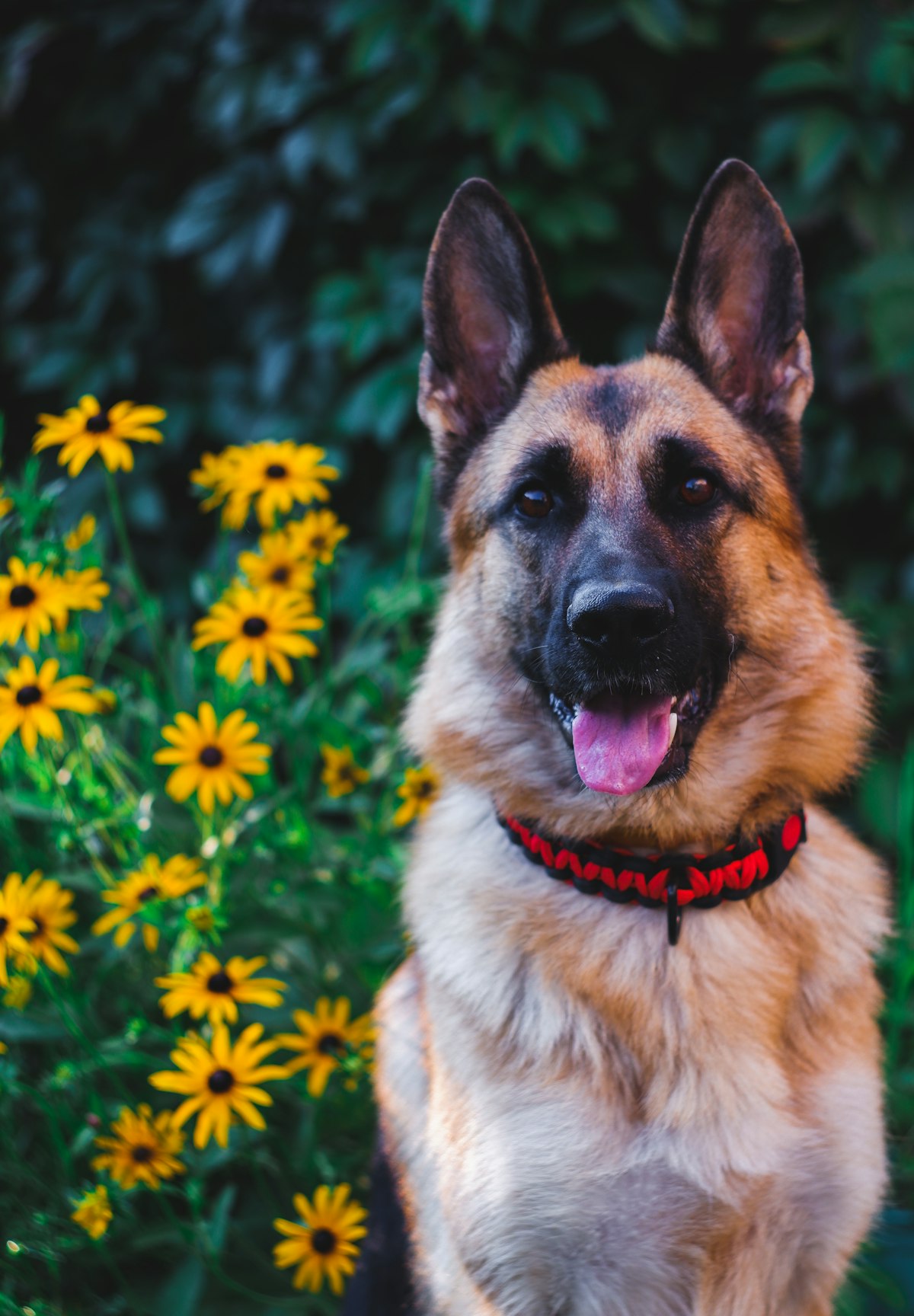
The Front Range is the collar we would put on most big dogs first. It uses Ruffwear’s Tubelok webbing, which is soft and tubular so there are no hard edges against the neck, with an ITW Nexus side-release buckle and an aluminum V-ring for the leash. A separate ID attachment point keeps tags from jangling. It is a flat collar, so it suits dogs that walk calmly and do not back out of collars.
Mid-range price tier, check current price. Large-dog size: 20-26 in neck.
Pros:
- Soft tubular webbing that spreads pressure and avoids sharp edges
- Aluminum V-ring for the leash, separate from the ID tag point
- Quick side-release buckle for fast on and off
- Built for outdoor use: the maker says the webbing resists fading, rain and mud
Cons:
- Buckle is plastic, not metal
- Flat collar, so a dog that backs out of collars can still slip it
Skip it if your dog is an escape artist; a martingale like the Country Brook or Wolfgang below is the safer choice.
2. Black Rhino Comfort Collar: Best Padded Collar on a Budget

Black Rhino lines the collar with quick-drying neoprene padding, which makes it a good fit for big dogs with sensitive skin or short coats, and for dogs that swim. Reflective stitching helps on early and late walks. It is the lowest-cost pick in this guide. Note the sizing: the brand lists Large as 19-23 in and XL as 23-27 in, but the Amazon listing currently offers the XL and not the Large, so we link the XL.
Budget price tier, check current price. Large-dog size: XL 23-27 in neck (Large 19-23 in is not offered on this listing right now).
Pros:
- Neoprene padding that dries quickly and is gentle on the neck
- Reflective stitching for low-light walks
- Weatherproof build for wet and muddy days
Cons:
- Large size (19-23 in) is not available on the Amazon listing at the moment
- Padding adds bulk compared with plain webbing
- Flat collar, not slip-resistant
Skip it if your dog measures 19 to 23 inches; check the listing for the Large before ordering.
3. Country Brook Petz Martingale: Best for Escape Artists
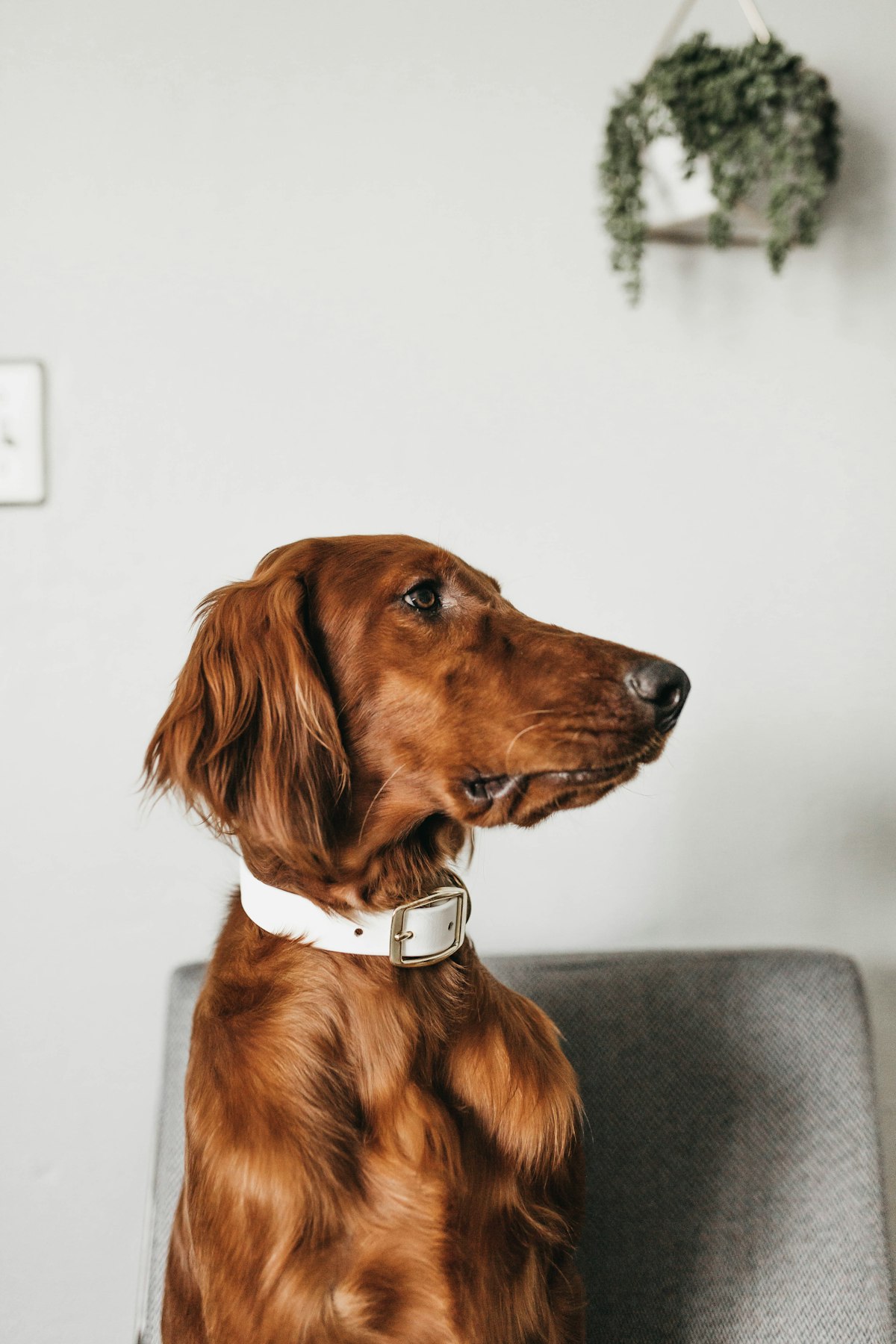
A martingale tightens a little when your dog pulls back and then loosens, which stops narrow-headed dogs from slipping out without acting like a choke collar. Country Brook’s version has no buckle at all: it slips over the head and you adjust it once for size. It uses nylon webbing and nickel-plated steel hardware, and the listing names breeds like Labradors, German Shepherds and Golden Retrievers for the Large.
Mid-range price tier, check current price. Large-dog size: Large, 1 in wide, 18-26 in neck.
Pros:
- Limited-slip design helps stop dogs backing out of the collar
- Nickel-plated steel hardware
- Wide size range in one Large, from 18 to 26 in
- Lots of colors to choose from
Cons:
- No buckle, so it has to go on and off over the head
- The listing says it is not for tie-out
- Must be fitted correctly so it cannot tighten too far
Skip it if you want a collar to leave on all day with tags; a flat collar like the Ruffwear is simpler for that.
4. Wolfgang Martingale: Best Martingale With a Buckle
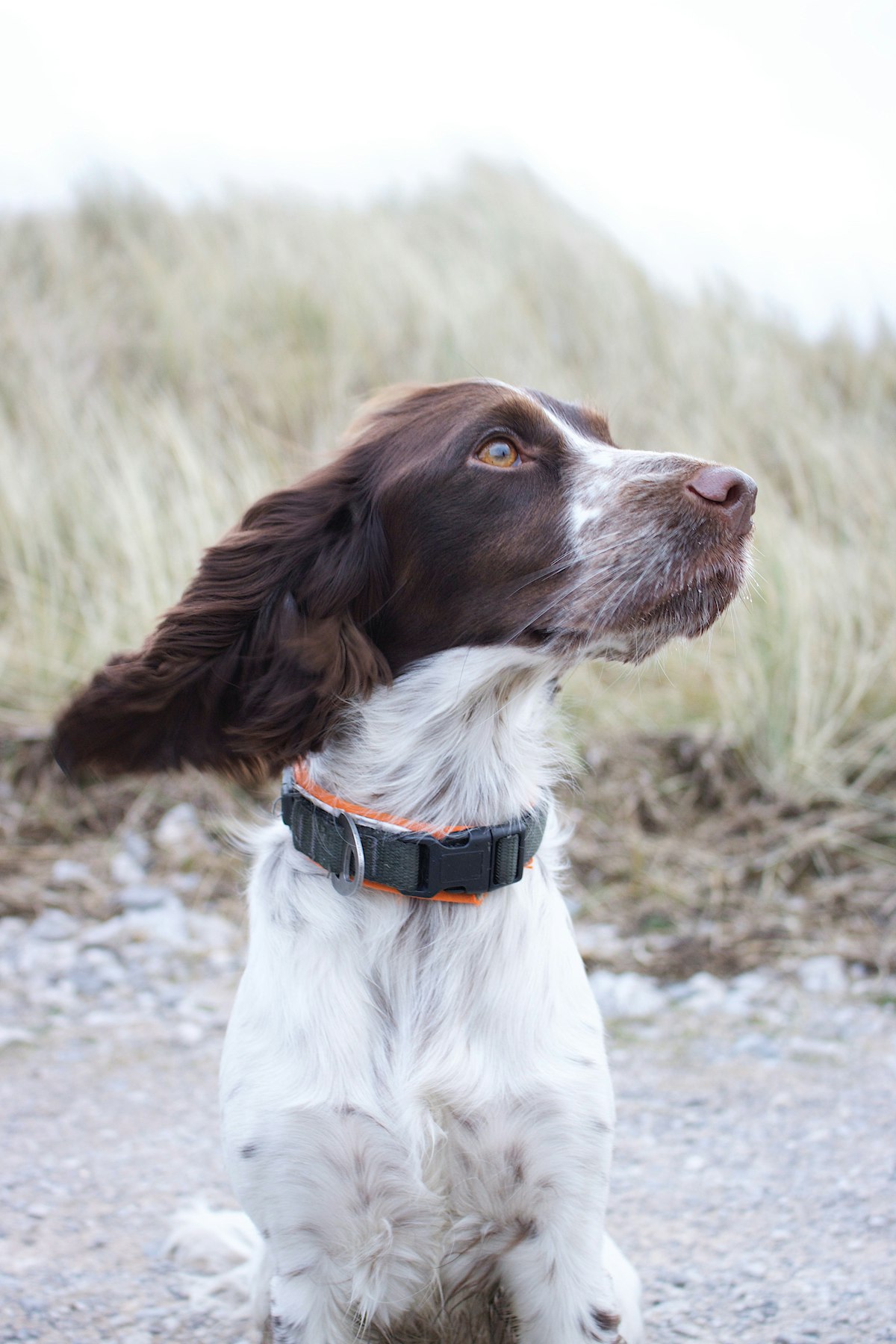
Wolfgang combines martingale control with a quick-release buckle, so you get slip resistance without pulling the collar over your dog’s head. The maker says it is built to withstand over 800 pounds of pull strength, with polyester webbing and a welded steel D-ring. It is the priciest pick here, and the prints are a big part of the appeal.
Premium price tier, check current price. Large-dog size: Large, 1 in wide, 18-22 in neck (larger necks need the XL).
Pros:
- Martingale control plus a quick-release buckle
- Maker rates it for over 800 lb of pull strength
- Welded steel D-ring for the leash
Cons:
- Highest price tier of the five
- Large tops out at 22 in, so many giant breeds need the XL
- Nylon buckle rather than metal
Skip it if your dog has a thick neck over 22 inches and you only see the Large in stock.
5. Spark Paws Tactical Collar: Best for Strong Pullers and Training

The Spark Paws tactical collar is 2 inches wide, padded with neoprene on the inside, and has a grab handle on top for quick control in training or a tight spot. It closes with a metal alloy quick-release buckle. That width spreads pressure well on muscular breeds, though it can feel bulky on dogs with shorter necks.
Mid-range price tier, check current price. Large-dog size: Large, 2 in wide, 21-26 in neck.
Pros:
- 2 in width spreads pressure on strong, muscular dogs
- Built-in handle for close control
- Metal alloy buckle and soft neoprene lining
Cons:
- Bulky on dogs with short necks
- Not a martingale, so it will not stop a dog backing out
- Large starts at 21 in; smaller necks need the Medium
Skip it if your dog pulls hard on every walk; a front-clip harness is the better fix for pulling.
How to Fit a Collar for a Large Dog
No matter how good the collar is, fit is everything. A collar that’s too loose can slip over your dog’s head; too tight and it can cause rubbing or breathing issues.
Use this quick fit checklist:
- Measure your dog’s neck: Wrap a soft tape measure around the spot where the collar will sit (high on the neck, not low on the shoulders). Add 1 to 2 inches for comfort.
- Use the two-finger rule: When the collar is on, you should be able to slide two fingers between the collar and your dog’s neck: snug but not tight.
- Check positioning: The collar should sit high up and not slide down near the chest when your dog walks.
- Test for slip-outs: Gently try to pull the collar over your dog’s head (without jerking). If it slides off easily, tighten it within the safe range.
For detailed measuring and fit tips for collars, crates, and beds, see our full crate-time and comfort guide for big dogs and our main large dog bed guide.
Collar vs. Harness for Big Dogs
Collars are essential for ID tags and basic handling, but many large dogs are more comfortable and safer when the main pulling force is on a harness instead of the neck.
As a general rule for big dogs:
- Use a well-fitted collar for ID, everyday wear, and calm walking.
- Use a front-clip or Y-shaped harness for strong pullers, long walks, or dogs with any neck/trachea concerns.
- Avoid relying on the collar alone for big dogs that lunge hard or have a history of injuries.
Not sure which harness style to pick for your dog? Start with our best dog harnesses for large dogs guide, then pair your choice with one of the collars above and a sturdy leash from our best leashes for large dogs roundup.
When to Replace a Dog Collar
Even the best dog collars for large dogs don’t last forever. Check your dog’s collar regularly and replace it when you notice:
- Fraying or thinning webbing.
- Rust, corrosion, or bent metal hardware.
- Cracks or chips in plastic buckles.
- Stretched spots where the collar no longer holds its size.
Most big dogs that walk daily will need a new collar every 6 to 24 months depending on how rough they are on gear and how much time they spend outdoors and in water.
Frequently Asked Questions
What width collar is best for large dogs?
Many large dogs do well in collars that are 1″ to 1.5″ wide. Wider collars help distribute pressure and are often more comfortable, especially for strong pullers or dogs with long necks.
Should I walk my big dog on a collar or harness?
For many big dogs, the sweet spot is both: use a comfortable, well-fitted collar for ID and a harness for most leash work. That way, you avoid putting all the force on your dog’s neck while still having a secure spot for tags.
Are martingale collars safe for large dogs?
When fitted correctly and used for leash walking, martingale collars can be a safe and helpful option for large dogs that slip out of flat collars. The key is to make sure the collar only tightens to a snug fit, not a choke.
What about prong or choke collars?
We generally recommend skipping prong and choke collars for everyday walking. If you’re struggling with pulling, it’s usually more effective (and kinder) to work with a positive-based trainer and pair a great harness with one of the comfortable collars above.
Which One Should You Buy?
If your dog is a calm walker who needs an everyday collar for tags, get the Ruffwear Front Range in 20-26 in.
If your dog has sensitive skin or loves water and wants the lowest-cost option, get the Black Rhino Comfort Collar in XL (23-27 in).
If your dog backs out of collars, get the Country Brook Petz Martingale in Large, or the Wolfgang Martingale in Large if you want a buckle.
If your dog is big, strong and in training, get the Spark Paws Tactical in Large (21-26 in).
Pair the collar with a harness for large dogs if your dog pulls, and a leash built for big dogs to finish the setup.
Get the free Big-Dog Gear Starter Checklist
The exact gear a large dog actually needs, with our #1 pick in every category, from bowls to GPS trackers. Enter your email and we’ll send the printable checklist straight to your inbox (plus the occasional big-dog gear guide, no spam).
Related guide: Collars and harnesses both depend on a good fit: see our large dog harness sizing guide for how to measure.