
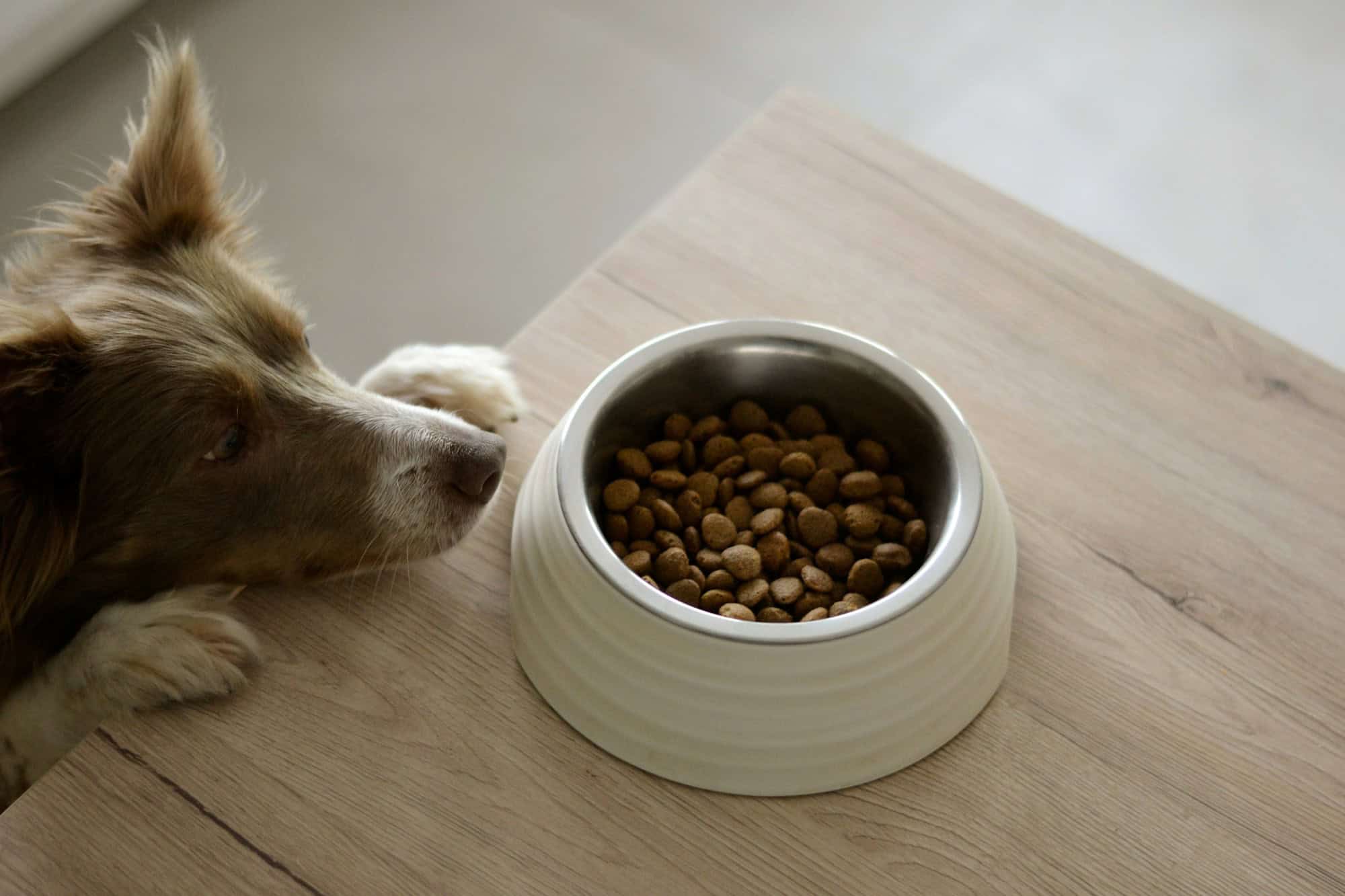
This dog feeding chart for large dogs covers how much to feed by weight, how often, and how to catch weight problems before they become health problems. Large dogs have different feeding needs than small breeds: slower growth curves as puppies, a higher risk of bloat, and a real tendency to gain weight quietly over months.
Our large dog breed weight chart uses these same weight bands for gear sizing, if you want to see crate, bed and collar sizes alongside these portions. If you want a specific calorie number to start from rather than a general chart, the calorie calculator uses your dog’s weight and life stage to give you one.
Guide last updated: July 26, 2026.
How Much Should a Large Dog Eat?
Portion size depends on adult weight, activity level, age, and whether the dog is spayed or neutered: not just breed. As a starting point, most adult large dogs eating a standard commercial dry food need roughly the following daily amounts, split across two meals:
- 50–60 lb dog: about 2.5–3 cups per day
- 60–80 lb dog: about 3–4 cups per day
- 80–100 lb dog: about 4–4.5 cups per day
- 100+ lb dog: about 4.5–5.5 cups per day, sometimes more for very active working dogs
These are starting ranges, not fixed rules. Always check the specific feeding chart on your food’s packaging first, since calorie density varies a lot between brands and formulas, then adjust based on your dog’s actual body condition.
How Often to Feed a Large Dog
Meal frequency matters more for large and giant breeds than for small dogs, mainly because of bloat risk (gastric dilatation-volvulus), which is more common in deep-chested large breeds.
- Puppies (under 6 months): 3–4 small meals per day
- Adolescents (6–18 months): 2–3 meals per day
- Adults: 2 meals per day, spaced roughly 8–12 hours apart
- Seniors: 2 smaller meals per day, adjusted for lower activity and calorie needs
A single large daily meal is generally discouraged for deep-chested large breeds (Great Danes, Standard Poodles, German Shepherds, Doberman Pinschers) since it’s associated with a higher bloat risk. Splitting food into two or more smaller meals, avoiding vigorous exercise right before or after eating, and using a slow-feed bowl for fast eaters all help reduce that risk. Bowl height is part of the same conversation, so read the bloat caveats in our elevated dog feeders for large dogs guide before raising your dog’s bowls.
How to Check Your Large Dog’s Weight Is on Track
Scale weight alone isn’t that useful for large breeds, since healthy weight varies widely even within a breed. A body condition check is more reliable and takes under a minute:
- Run your hands along your dog’s ribs with light pressure: you should feel them easily without heavy pressing, but not see them clearly.
- Look at your dog from above: there should be a visible waist tucking in behind the ribs.
- Look at your dog from the side: the belly should tuck up behind the ribcage, not hang level with the chest.
- Repeat this check monthly and track the trend over time, not just a single reading.
Signs of overfeeding: ribs are hard to feel under fat, no visible waist from above, belly hangs level with or below the chest, reduced energy or reluctance to exercise.
Signs of underfeeding: ribs, spine, or hip bones are visibly prominent, an exaggerated waist tuck, dull coat, or low energy despite adequate rest.
Common Feeding Mistakes with Large Dogs
- Free-feeding (leaving food out all day): makes it hard to spot appetite changes and often leads to overeating.
- Feeding by the bag’s generic chart alone: those numbers are averages: your dog’s actual activity level and metabolism may need more or less.
- Too many treats: treats should stay under 10% of daily calories; large dogs add weight quickly when treats aren’t counted.
- Feeding large-breed puppies an adult or all-life-stages food too early: can cause growth that outpaces joint development: use a large-breed puppy formula until your vet says otherwise.
- Exercising right before or after a big meal: raises bloat risk in deep-chested breeds; leave at least an hour of rest on each side of a meal.
Frequently Asked Questions
How many cups of food should a large dog eat per day?
Most adult large dogs need roughly 2.5–5.5 cups of a standard dry food per day, depending on weight and activity level. Always check your specific food’s feeding chart, since calorie density varies between brands.
Is it better to feed a large dog once or twice a day?
Twice a day is generally recommended for large and giant breeds, mainly to reduce bloat risk in deep-chested dogs and to keep energy and blood sugar more stable throughout the day.
When should a large-breed puppy switch to adult food?
Most large-breed puppies should stay on a large-breed puppy formula until 15–24 months, since large breeds mature more slowly and benefit from controlled calcium and calorie levels during that longer growth window. Check with your vet for your specific breed.
What foods increase bloat risk in large dogs?
It’s less about specific foods and more about feeding pattern: a single large daily meal, eating too fast, and heavy exercise right before or after eating are the bigger risk factors. Slow-feed bowls and splitting meals help reduce risk.
How do I know if my large dog is overweight?
Run a monthly body condition check: you should be able to feel ribs easily without heavy pressing, see a waist tuck from above, and see the belly tuck up from the side. If ribs are hard to feel and there’s no visible waist, your dog is likely carrying extra weight.
Should I feed my large dog a grain-free diet?
Not automatically. Some grain-free formulas have been linked to a heart condition called dilated cardiomyopathy (DCM) in certain large breeds. Talk to your vet before switching to grain-free, especially for breeds already predisposed to DCM.
Get the free Big-Dog Gear Starter Checklist
The exact gear a large dog actually needs, with our #1 pick in every category, from bowls to GPS trackers. Enter your email and we’ll send the printable checklist straight to your inbox (plus the occasional big-dog gear guide, no spam).
Once you know the amounts, the hardware matters: see the best dog bowls for large dogs, the best slow feeder bowls if your dog gulps, and the best automatic dog feeders if meal times fight your schedule.