
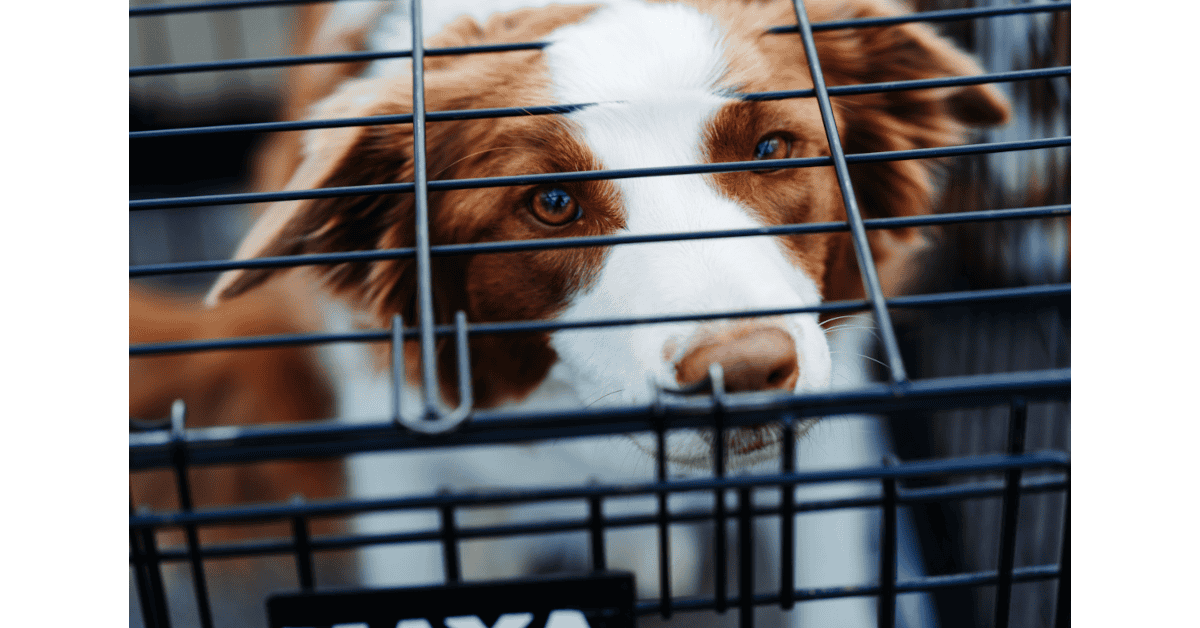
How long can a dog stay in a crate? A fully house-trained adult dog should spend no more than 4–6 hours at a time crated during the day. Puppies manage far less: about 30–60 minutes at 8–10 weeks, 1–2 hours at 11–14 weeks, and 2–3 hours at 15–16 weeks. Overnight is different: most dogs can comfortably sleep through the night in a crate as long as they get enough exercise, potty breaks, and freedom during the day. Below is the full breakdown by age, plus how to build a crate routine that stays humane and stress-free.
For large dogs especially, the balance is tricky: you want a crate that fits, a routine that respects their bladder and joints, and clear limits on how long they stay inside. This guide breaks down realistic crate times by age, plus how to build a healthy schedule.
How Long Can a Dog Stay in a Crate Safely?
Guide last updated: July 26, 2026.
Every dog is different, but there are clear time limits that keep crating safe and humane for big dogs. In simple terms, how long can a dog stay in a crate without a break depends on their age, bladder control, health, and training level.
Here are general daytime guidelines used by many trainers and vet-backed resources:
- Young puppies (8–10 weeks): about 30–60 minutes at a time, then out for potty and play.
- Puppies 11–14 weeks: up to 1–2 hours at a time.
- Puppies 15–16 weeks: up to 2–3 hours at a time.
- Adult dogs (fully house-trained): ideally no more than 4–6 hours in a row during the day.
- Overnight: many dogs can sleep in a crate through the night, as long as they get enough exercise, potty breaks, and freedom during the day.
These are general ranges, not hard rules. Some dogs need more frequent breaks due to age, health, or anxiety. When in doubt, talk to your vet or a qualified trainer.
For more detail on safe crate routines, check out the Humane Society crate training guidelines.
If you haven’t picked a crate yet, start with our product guide: best dog crates for large dogs.
Crate Time by Age and Life Stage
Puppies (under 6 months)
Puppies have tiny bladders and short attention spans. Crate time for youngsters should be about teaching them to relax, not asking them to “hold it” all day.
Rule of thumb: many trainers use “age in months + 1” hours as a maximum daytime crate stretch (with an upper limit of around 3–4 hours).
Example: A 3-month-old puppy might handle around 3–4 hours, but that doesn’t mean you should do that regularly if you can avoid it.
For puppies, think in short sessions:
- Crate time after potty and play, when the puppy is ready to nap.
- Lots of predictability: potty → play → crate rest → repeat.
- Overnight: expect to set an alarm for a potty break once or twice until they’re older.
Adult dogs
Healthy adult dogs with good bladder control generally do best with:
- Daytime crate stretches: ideally no more than about 4 hours in a row whenever possible.
- Absolute upper limit: many pros recommend avoiding more than 6 daytime hours in a crate on a regular basis.
- Overnight: 7–8 hours of crate sleep is often fine when paired with exercise and freedom during the day.
For most healthy adult dogs, how long can a dog stay in a crate during the day should be limited to shorter stretches with plenty of breaks for walks, play, and family time.
If your schedule regularly requires longer alone time, look into a mix of crate rest, exercise, and other management tools (exercise pens, dog walker, dog daycare, or a trusted friend).
Senior dogs
Older dogs may struggle with:
- Weaker bladder control
- Stiff joints from staying in one position
- Anxiety if they can’t see or reach their family
For seniors, aim for shorter crate stretches with more frequent potty and stretch breaks. Many families transition older dogs to a gated room or exercise pen instead of strict crating.
How to Make Crate Time Healthier for Your Dog
1. Start with the right size crate
Your dog should be able to stand up, turn around, and lie fully stretched out without being cramped.
To get sizing right, use a tape measure and follow our guide on how to measure a dog for a crate, bed, and harness, then match those numbers to the crate size chart.
2. Build a predictable daily routine
Instead of one giant block of crate time, break the day into predictable chunks:
- Morning potty and walk
- Breakfast + short training or sniff walk
- Crate rest while you work or run errands
- Midday potty break + play or walk
- Another crate rest period if needed
- Evening walk, play, and family time outside the crate
The idea: crate time becomes one predictable part of the day, not the default all-day state.
3. Make the crate comfortable (but safe)
Most large dogs do better on a supportive surface instead of bare plastic or metal. Consider:
- A crate mat or orthopedic pad sized to your dog’s measurements
- Light blanket or cover if your dog relaxes better in a den-like space
- Chew-safe toys only if your dog can be trusted not to ingest them
Need help picking a bed that fits your dog’s body and crate? See our best dog beds for large dogs guide for orthopedic and durable options.
4. Don’t forget mental and physical exercise
Dogs who get enough exercise and enrichment settle in their crate more easily. Aim for a mix of:
- Walks that allow sniffing and exploring, not just marching
- Short training sessions (5–10 minutes) for manners and tricks
- Safe chew sessions and puzzle toys when supervised
For tough chewers, we keep a list of the best dog toys for aggressive chewers to help burn energy in a safer way.
How to Tell If Your Dog Is Spending Too Long in a Crate
Every dog has their own limits. Watch for these signs that your dog may need shorter crate stretches or a different setup:
- Frequent crate accidents even after careful potty training
- Reluctance to enter the crate, or hiding when you pick up the crate door
- Excessive barking, whining, or drooling in the crate
- Chewing or scratching at the crate bars or door
- Stiffness or limping when your dog comes out after a long stretch
If you see any of these regularly, talk to your vet or a certified trainer. Sometimes the answer is shorter crate blocks, more exercise, a larger or more comfortable crate, or a different kind of confinement (like a baby-gated room).
Crate Time vs. Other Confinement Options
A crate isn’t the only way to keep your dog safe when you can’t supervise. For some dogs, rotating tools works best:
- Crate: best for short rests, naps, and overnight sleep when the crate is sized and introduced properly.
- Exercise pen (x-pen): allows more room to move around, especially for puppies and seniors.
- Gated room: good for dogs who are mostly trustworthy but still need some limits.
You might use a crate for naps and overnight, and a gated room or x-pen for longer daytime stretches.
Frequently Asked Questions
Is it okay to crate a dog while I’m at work?
Crating a dog for a full 8–9 hour workday is often too much if that’s the only structure in their life. If your schedule is long, try to:
- Hire a dog walker or pet sitter for a midday break
- Use a mix of crate time and a safe gated area
- Reserve the crate for naps and overnight, not the entire day
If your dog is regularly crated for a full workday, talk to a trainer or your vet about alternatives to reduce stress and physical strain.
Can a dog sleep in a crate every night?
Many dogs sleep in crates at night without any issues, especially if:
- The crate is sized correctly and comfortable
- Your dog gets enough potty breaks and exercise during the day
- The crate is in a spot where they feel safe (often the bedroom or a nearby hallway)
If your dog seems stiff, anxious, or reluctant every morning, consider adjusting their crate setup or giving them a different sleeping option.
How do I know if the crate is the right size?
Your dog should be able to:
- Stand up without hitting their head
- Turn around easily
- Lie down fully stretched without being squished against the sides
If you’re unsure, grab a tape measure and follow our step-by-step measuring guide, then compare those numbers to the crate’s length and height.
Should I ever punish my dog with crate time?
No. You want the crate to be a neutral or positive place where your dog can rest. If you use it as punishment, your dog may start to fear or resist going inside.
Final Thoughts
The crate can be a great tool for big dogs, but it works best when it’s sized correctly, used in reasonable time blocks, and paired with real exercise, training, and family time.
When in doubt, shorten crate time and add more breaks. How long can a dog stay in a crate should always be guided by your dog’s comfort and well-being, not just convenience.
If you’re still setting up your dog’s space, you might find these helpful next:
- Best dog crates for large dogs
- Best dog beds for large dogs
- Best dog harnesses for large dogs
- Best dog leashes for large dogs
Use crate time as one part of a bigger routine, not the whole plan, and your dog’s body and brain will be much better off.
Worried about how they’re doing in there? A dog camera answers that in real time. Here are the best dog cameras for large dogs.
Get the free Big-Dog Gear Starter Checklist
The exact gear a large dog actually needs, with our #1 pick in every category, from bowls to GPS trackers. Enter your email and we’ll send the printable checklist straight to your inbox (plus the occasional big-dog gear guide, no spam).