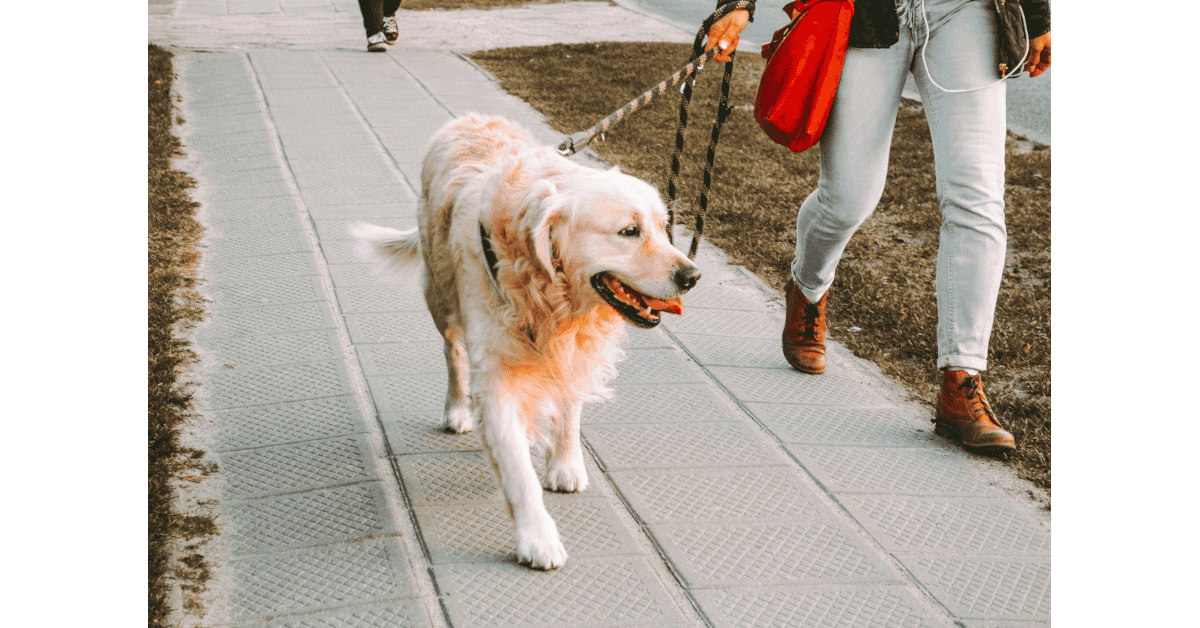
When a large dog pulls on leash, it’s not just annoying – it can be dangerous. One hard lunge toward a squirrel or another dog can jerk your shoulder, drag you off-balance, or snap cheap gear. The good news: with the right setup and a simple plan, leash training for large dogs can be calm, safe, and even fun.
This guide walks you through a step-by-step loose leash training plan for big dogs, the gear that makes it easier, and how to avoid common mistakes. Along the way, we’ll link to our favorite harnesses, leashes, and collars for large dogs so your whole setup works together.
Note: This article may contain affiliate links. If you click and buy, we may earn a small commission at no extra cost to you. We only recommend gear we’d feel comfortable using for our own big dogs.
Why Large Dogs Pull on Leash
Before you fix pulling, it helps to understand why it happens in the first place. For most big dogs, it comes down to a mix of:
- Speed mismatch: your dog naturally walks faster than you do.
- Reinforcement: every time they pull and move forward, pulling “works.”
- Excitement and environment: new smells, people, and dogs are extremely motivating.
- Inconsistent rules: sometimes pulling is allowed (when you’re in a hurry), sometimes it’s not.
Leash training for large dogs is mostly about changing what gets rewarded. If pulling never moves them forward and walking beside you always does, most big dogs can learn to walk politely without painful tools.
Step 1: Set Up Safe, Big-Dog-Ready Gear
Trying to leash train a powerful dog with flimsy gear is asking for trouble. Start by upgrading to equipment that’s built for larger breeds.
1.1 Harness + collar + leash combo
For most big dogs, we recommend:
- A front-clip or Y-shaped harness designed for large dogs (see our best dog harnesses for large dogs guide).
- A well-fitted flat or martingale collar for ID tags (see best dog collars for large dogs).
- A non-retractable, 6-foot leash with a sturdy clip and solid handle (see best dog leashes for large dogs).
Attach the leash to the harness for most of the training work. The collar is there for ID and backup, not to take the full force of a big dog’s lunge.
1.2 Fit check for large dogs
Quick fit checklist before you start:
- Harness: two fingers fit between harness and body; straps don’t rub armpits; front ring sits on the chest, not up in the throat.
- Collar: two-finger rule around the neck; can’t slip over the head when gently pulled.
- Leash: clip is heavy-duty and moves freely; webbing or rope isn’t frayed.
If you’re not sure about sizing, our crate comfort guide and other big-dog posts can help you think about fit, pressure, and comfort across your dog’s setup, not just the leash.
Step 2: Teach “Loose Leash = We Walk, Tight Leash = We Stop”
The core rule of leash training for large dogs is simple:
Your dog only gets to move forward when the leash is loose.
This mirrors the same principle many trainers and organizations use: if pulling never “works,” dogs stop investing in it and switch to the behavior that gets rewarded – walking on a slack leash. For more loose-leash tips and games, see this AKC article on how to stop your dog from pulling on leash.
2.1 Start indoors or in a low-distraction area
- Clip the leash to your dog’s harness.
- Stand in a quiet space (living room, hallway, or fenced yard).
- Hold a few small treats in your leash hand or treat pouch.
- Say a simple cue like “Let’s go” and take 2–3 steps forward.
If the leash stays loose and your dog is roughly beside you:
- Mark it with a happy “Yes!” and give a treat at your side.
- Take a few more steps and repeat.
If the leash goes tight:
- Stop walking immediately. Plant your feet.
- Wait silently for your dog to turn back, step toward you, or release tension on the leash.
- As soon as the leash loosens, say “Yes!”, treat at your side, and walk forward again.
At first, this can feel slow and clunky. That’s normal – especially for big dogs that have been allowed to pull for months or years.
2.2 Gradually add distractions and distance
Once your dog understands “tight leash = we stop, loose leash = we go” in an easy environment:
- Practice in your yard or quiet parking lot.
- Then move to a calmer section of your normal walking route.
- Slowly work closer to bigger distractions (busy streets, parks, etc.).
Keep early sessions short – 5–10 minutes – and treat them as training walks, not “exercise at all costs.” You can always give your dog extra play time at home with tough toys or in your apartment setup for big dogs later.
Step 3: Use Rewards Strategically for Big Dogs
Large dogs are powerful enough that physical strength alone won’t fix pulling. Rewards do the heavy lifting.
3.1 Choose high-value rewards
For tough pullers, use rewards your dog truly cares about:
- Small food rewards: tiny pieces of soft treats or kibble.
- “Life rewards”: moving forward, sniffing a bush, greeting a friend.
At the start, reward very frequently. As your dog improves, you can fade food rewards and rely more on life rewards like sniff breaks.
3.2 Reward position, not just behavior
Try to deliver rewards:
- Right next to your leg (where you want your dog’s head to be).
- When the leash is hanging in a relaxed “J” shape.
- When your dog checks in with you during the walk.
This keeps your dog’s attention near you instead of at the end of a tight leash.
Step 4: Common Leash Training Mistakes (Especially with Big Dogs)
4.1 Letting pulling “work” sometimes
If you let your dog pull because you’re in a hurry or it’s cold outside, you’re teaching them that pulling works at least some of the time. For big dogs, even occasional reinforcement is enough to keep the behavior strong.
Fix: On training walks, never move forward on a tight leash. If you’re in a rush, do a quick potty break instead of a full walk.
4.2 Relying on harsh tools instead of training
Prong, choke, or shock collars may suppress pulling temporarily, but they don’t teach your dog what to do instead, and they can add stress or pain. For most large-dog families, a front-clip harness + good leash training is a more sustainable solution.
4.3 Skipping exercise and mental work
A bored, under-exercised big dog will explode on walks. Combine leash training with:
- Appropriate physical exercise (fetch, play, structured walks).
- Mental work like sniffy walks, simple training, and puzzle toys.
- A comfortable home setup with a good bed for large dogs and safe rest spots.
Sample Leash Training Plan for a Large Dog
Here’s a simple 7-day structure you can adjust based on your schedule.
Days 1–2: Indoor foundations
- Two 5–10 minute sessions per day indoors or in a hallway.
- Focus on “tight leash = stop, loose leash = go.”
- Reward every few steps of loose leash walking.
Days 3–4: Yard or quiet area
- Two 10-minute sessions per day in the yard or a calm parking lot.
- Add mild distractions (different smells, surfaces, and directions).
- Keep your expectations low – focus on the process, not distance.
Days 5–7: Short “real world” walks
- One or two 10–15 minute training walks per day on your normal route.
- Every time the leash tightens, stop. When slack returns, praise and move forward.
- Reward generously for check-ins and stretches of loose leash.
After the first week, gradually extend the length of your walks and reduce food rewards, using sniff breaks and forward movement as the main payout.
FAQ: Leash Training for Large Dogs
How long does it take to stop leash pulling?
For many big dogs, you’ll see small improvements in a few sessions, but reliable loose leash walking can take several weeks of consistent practice. The longer your dog has rehearsed pulling, the more patient you’ll need to be.
Should I walk my large dog on a collar or harness?
For most large dogs, the safest setup is a well-fitted harness for leash attachment plus a collar for ID tags. That way, hard pulls don’t put all the pressure on your dog’s neck.
Can I leash train an older large dog?
Yes. Adult and senior dogs can learn new leash habits as long as training is consistent and fair. You may need shorter sessions and more breaks, but the same loose leash rules still apply.
When should I get professional help?
If your dog is extremely strong, reactive, or you feel unsafe on walks, it’s worth working with a positive reinforcement trainer who has experience with big dogs. They can tailor a plan to your specific dog and environment.
Next Steps: Build a Big-Dog Walking Setup That Actually Works
Leash training for large dogs is much easier when your gear, routine, and home setup all support calmer behavior. The basic formula is:
- Use a harness, collar, and leash built for big dogs.
- Follow the “tight leash = stop, loose leash = go” rule every time.
- Reward generously for walking beside you and checking in.
- Give your dog enough physical and mental exercise outside of strict training.
To round out your big-dog setup, check out:
- Best dog harnesses for large dogs
- Best dog leashes for large dogs
- Best dog collars for large dogs
- Best dog beds for large dogs
- Best dog toys for aggressive chewers
- Apartment setup for big dogs
- All Dog Gear guides
Pick one or two short training walks per day, stick to the loose leash rules, and you’ll gradually turn “sled dog mode” into relaxed, safe walks for both you and your big dog.