
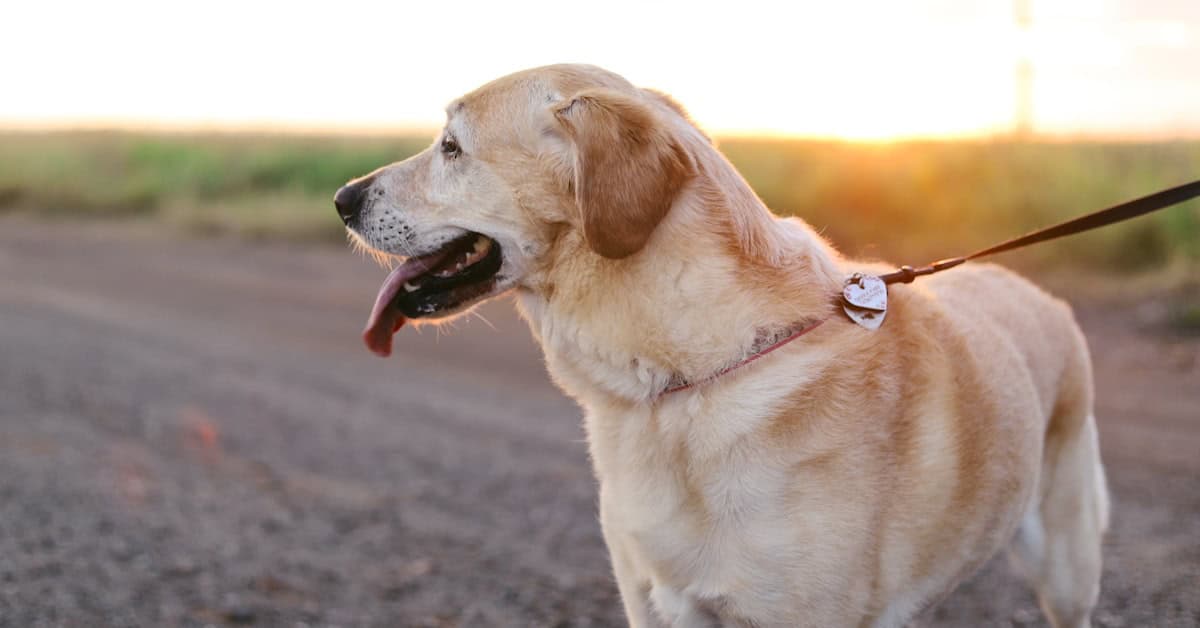
The best pet tech for large dogs, in order of impact: a GPS tracker if your dog has ever gotten loose (start with the Tractive DOG XL), a dog camera if they spend workdays home alone (Petcube Bites 2 Lite), an automatic feeder if mealtimes fight your schedule (PetSafe Smart Feed), and a durable-toy subscription if you’re restocking destroyed toys monthly (BARK Super Chewer). This guide ranks all four categories by impact and links to our full head-to-head comparisons.
Big dogs break small-dog tech: portions are too small, treat slots too narrow, collars too flimsy, toys too soft. Every recommendation below was chosen specifically for 50-plus-pound dogs.
Prices last checked: July 26, 2026. Use any Check Price link for the current price.
Smart Gear for Large Dogs, Ranked by Impact
1. GPS tracker: safety first, health data included
Nothing else in pet tech matters if your dog is missing. A cellular tracker turns a panicked search into a map pin. Our pick for big dogs is the Tractive DOG XL (month-long battery, worldwide tracking, plans from roughly $5–13/month), with the Fi Series 3 as the premium collar and Halo 4 for GPS fencing. Full comparison: best GPS dog trackers for large dogs. One thing that has shifted recently: the same collars now double as health monitors, so this is one purchase, not two. Tractive reports resting heart rate and respiratory rate on its Premium plan, and Fi flags scratching, licking and barking patterns. If health trends matter more to you than location, see our comparison of the best health monitoring collars for large dogs.
2. Dog camera: for the home-alone hours
A camera answers “what does he do all day?” and a treat dispenser makes check-ins positive. The Petcube Bites 2 Lite wins for big dogs: a lower-cost camera with no subscription, and it handles large-dog treat sizes. Full comparison: best dog cameras for large dogs.
3. Automatic feeder: consistency your dog can count on
Most feeders can’t serve a real big-dog meal; the PetSafe Smart Feed dispenses up to 4 cups per sitting from a 24-cup hopper with app scheduling. Check kibble-diameter specs before buying any feeder: large-breed kibble jams small chutes. Full comparison: best automatic dog feeders for large dogs.
4. Toy & treat subscription: enrichment on autopilot
Power chewers destroy toys faster than most people restock. BARK Super Chewer delivers ultra-durable, size-matched toys monthly (~$29–45/month) and replaces destroyed ones free; Bullymake serves the truly relentless. Full comparison: best dog subscription boxes for large dogs.
Why Big Dogs Need Different Pet Tech Than Small Dogs
Most pet tech is designed around the “average” 20-pound dog, and it shows the moment a Labrador or a Great Dane gets hold of it. Shopping for a large dog means checking a different set of specs than the marketing leads with. Here’s what actually matters once your dog clears 50 pounds.
GPS trackers clip to a collar, so the tracker’s weight and the collar’s strength both matter. A big dog that bolts hits the end of a flimsy collar hard, so you want a tracker rated for large breeds with a secure mount, plus enough real-world range and battery life to survive a long chase across open country, not just a suburban yard.
Automatic feeders default to small-dog portions. A large dog eats three to six cups a day, often in big meals, so hopper capacity and the width of the dispensing chute are the make-or-break specs: narrow chutes jam on large kibble, and a small hopper means refilling constantly.
With a dog camera, the two things that scale with size are treat-toss distance and mounting stability. Big dogs roam bigger rooms and can knock a flimsy camera off a shelf, so look for a heavy base or a wall mount and enough tossing range to actually reach your dog across the room.
And durability is non-negotiable. A power chewer shreds plush and thin rubber in minutes, so any toy or treat subscription has to be built for aggressive chewers. Otherwise you’re paying every month to replace destroyed toys.
Pet Tech for Large Dogs at a Glance
Not sure where to start? Here’s how the four categories compare on cost and what each one actually fixes. Follow the guide link in any row for the full ranked picks.
| Category | What it solves | Typical upfront | Ongoing | Full guide |
|---|---|---|---|---|
| GPS tracker | Finding a dog that gets loose, plus spotting health changes early | $30–$100 | ~$5–$13/mo | GPS trackers → |
| Dog camera | Checking in during home-alone hours | $40–$250 | Optional cloud, ~$3–$10/mo | Dog cameras → |
| Automatic feeder | Consistent meals on a schedule | $50–$200 | None | Auto feeders → |
| Toy & treat subscription | Restocking durable toys and chews | $0 | ~$23–$45/mo | Subscription boxes → |
What to Buy First (In Priority Order)
- Start here: Tractive DOG XL tracker: safety beats convenience.
- Next: add the Petcube Bites 2 Lite camera: coverage at home and away.
- Then: add the PetSafe Smart Feed: the full daily routine is now automated.
- Ongoing budget: a Super Chewer subscription keeps enrichment fresh without shopping trips.
Tech supports the basics. It doesn’t replace them. A well-fitted collar, a solid harness, proper bowls, and a supportive bed still come first.
Common Pet-Tech Mistakes Big-Dog Owners Make
A few buying mistakes come up again and again with big dogs. Each one turns useful tech into wasted money.
- Buying gear rated for small or medium dogs. Check the weight and size rating, not just the product photo. A feeder built for a beagle won’t keep up with a mastiff.
- Undersizing the feeder. Match hopper capacity to your dog’s daily volume, or you’ll be topping it off every day and defeating the point.
- Ignoring collar strength with a GPS tracker. A tracker is only as reliable as the collar it’s clipped to; pair it with a sturdy, well-fitted collar so it can’t be lost mid-chase.
- Choosing a tracker on price alone. Cheap trackers cut corners on range, battery, and update frequency. That’s exactly when a fast, far-roaming dog is hardest to catch.
- Treating tech as a replacement for training and exercise. A camera or feeder manages the day; it doesn’t tire out a working breed. Tech supports a routine. It doesn’t replace one.
How Much Should You Budget for Pet Tech?
Pet tech splits into one-time hardware and recurring costs, and big-dog versions sit at the higher end of the hardware range because they’re built tougher. A realistic safety-first starter (a solid GPS tracker plus its subscription) runs roughly $40–$100 up front and $5–$13 a month. Add a camera ($40–$250) and an automatic feeder ($50–$200), both mostly one-time buys, and you’ve covered safety, monitoring, and meals. The only purely recurring category is a durable-toy subscription, usually $23–$45 a month depending on box size. Our rule of thumb: pay a recurring cost only where it earns its keep: the GPS subscription, and a Super Chewer box if your dog actually destroys toys every month.
Go Deeper: Fence & Tracker Guides
- Best smart water fountains for large dogs, for hands-off hydration tracking alongside your feeder setup.
Frequently Asked Questions
What pet tech is worth buying for a large dog?
In order of impact: a GPS tracker (Tractive DOG XL) for safety, a dog camera (Petcube Bites 2 Lite) for home-alone hours, an automatic feeder (PetSafe Smart Feed) for consistent meals, and a durable-toy subscription (BARK Super Chewer) for enrichment. Start with the tracker: everything else is convenience; that one is safety.
How much does smart dog gear cost per month?
Ongoing costs: GPS tracking runs about $5–13/month (Tractive) or ~$16/month equivalent (Fi annual plan); dog cameras are free to run (Petcube) or ~$7/month with AI alerts (Furbo); automatic feeders have no fees; toy subscriptions run about $23–45/month. A full smart setup lands around $35–65/month plus hardware.
Does small-dog pet tech work for large dogs?
Often poorly. Feeders jam on large-breed kibble, treat cameras choke on big training treats, tracker bands don’t fit thick necks, and toys are undersized. Always check size and capacity specs. It’s the most common reason large-dog owners return pet tech.
Is pet tech a substitute for training and exercise?
No. Cameras monitor, feeders schedule, trackers locate. None of them exercise or train your dog. Treat tech as a support layer on top of walks, enrichment, and training basics.
Do GPS dog trackers work without a monthly subscription?
Most real-time GPS trackers need a subscription, because they use a cellular connection to report location live. That’s the monthly fee. A few Bluetooth or “no-fee” trackers skip the subscription but only work within a short range, which defeats the purpose for a big dog that covers ground fast. For a large dog that actually bolts, a subscription tracker with true cellular range is worth the recurring cost.
What’s the best all-in-one pet tech setup for a large dog?
There’s no single device that does everything well, so the strongest setup combines the impact categories: a GPS tracker for safety, a camera for the home-alone hours, and an automatic feeder for consistent meals. Start with whichever problem is most pressing (safety first if your dog has ever escaped) and add the others over time rather than buying everything at once.
Are automatic feeders safe for large dogs that gulp their food?
They’re safe, but pair them with the right bowl. An automatic feeder controls when and how much your dog eats, which already helps; for a fast eater, dispense into a slow-feeder bowl so the feeder handles the schedule and the bowl slows the gulping. Size up, too: a large dog’s full portion has to clear the dispensing chute without jamming.
Final Thoughts
Build in impact order (tracker, camera, feeder, subscription) and buy large-dog-rated versions of each. Every category above links to our full comparison with current pricing, so you can go as deep as you want before spending anything.
Get the free Big-Dog Gear Starter Checklist
The exact gear a large dog actually needs, with our #1 pick in every category, from bowls to GPS trackers. Enter your email and we’ll send the printable checklist straight to your inbox (plus the occasional big-dog gear guide, no spam).