
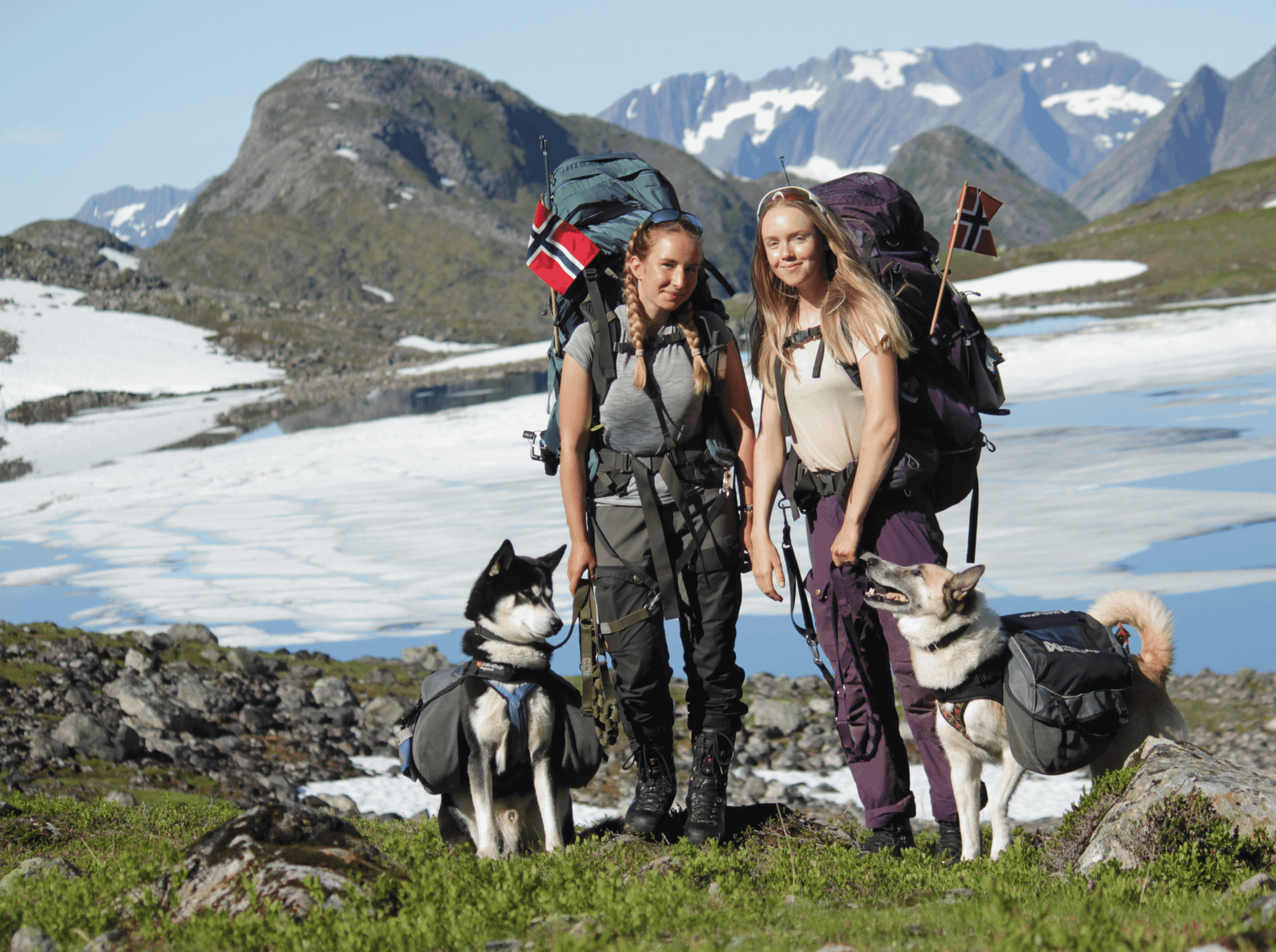
If you’ve got a 60, 80, or 100-pound dog who wants a job on the trail, a dog backpack lets them carry their own water, food, and poop bags instead of loading it all onto your back. Large breeds especially take to it: they’re built to carry weight, and a well-fitted pack gives them something to do besides just walking. The trick is picking one sized right for a big dog’s chest and shoulders, not a scaled-up version of a pack made for a 25-pound terrier.
Short answer: the best dog backpack for large dogs is the Ruffwear Approach Pack in Large/X-Large for regular trail use; the Kurgo Big Baxter is the budget pick for day hikes, and the Mountainsmith K9 in Large is the one to get for a custom, ventilated fit.
Amazon Associate disclosure: As an Amazon Associate we earn from qualifying purchases. This post contains Amazon affiliate links; if you click and buy, we may earn a small commission at no extra cost to you. See our Disclosures page for details.
Price tiers last checked: October 4, 2026. Tiers compare the picks in this guide, not the whole market. Use any Check Price link for the current price on Amazon.
Recent updates (4 Oct 2026): we re-checked all three packs on Amazon in the sizes we link (Ruffwear Large/X-Large, Mountainsmith Large). All are in stock, though the Kurgo Big Baxter is running low, and the price tiers are unchanged.
Dog Backpacks for Large Dogs at a Glance
| Pick | Best for | Price tier |
|---|---|---|
| 1. Ruffwear Approach Pack | Multi-day backcountry trips | Premium |
| 2. Kurgo Big Baxter | Budget-friendly day hikes | Budget |
| 3. Mountainsmith K9 Dog Pack | Custom fit and ventilation | Mid-range |
Why Dog Backpacks Matter
A big dog carrying its own gear isn’t a gimmick. It’s a real way to burn mental and physical energy on a walk that would otherwise just be, well, a walk. Working breeds like Labs, shepherds, and huskies were bred to have a job, and a pack that holds their water bottle and a baggie of treats gives them a small version of that.
There’s a practical side too. If you’re hiking with a 70-pound dog, having them carry their own water for a day hike means less weight in your own pack. Vets generally recommend a dog carry no more than 10 to 12 percent of its body weight when starting out, working up to a max of around 25 percent for a conditioned dog on a shorter outing. That’s a real difference for you on a long trail day. At home, a large-capacity water fountain keeps refills easy after the hike.
The catch is fit. A pack that rides too high chafes at the armpits, one that’s too loose swings and throws a dog’s balance off, and one that’s sized for a 40-pound dog will pinch a 90-pound dog’s ribs no matter how many straps you loosen.
Types of Dog Backpacks
Saddlebag Packs
Best for: everyday walks and short day hikes.
Example pick: Kurgo Big Baxter.
This is the standard format: two zippered panniers that drape over the dog’s back, connected by a harness with a chest strap and belly band. It’s the simplest design and usually the cheapest, since there’s less structure and padding than a full expedition pack.
Multi-Day and Expedition Packs
Best for: backpacking trips and longer treks with real gear weight.
Example pick: Ruffwear Approach Pack.
These add more padding along the spine, more adjustment points to fine-tune the fit over hours of wear, and sturdier materials that hold up to repeated loading and unloading. They cost more, but if your dog is regularly carrying a few pounds of food and water over multiple days, the extra support matters.
Ventilated, Adjustable-Fit Packs
Best for: hot climates, dogs with sensitive skin, or owners who want a highly customizable fit.
Example pick: Mountainsmith K9 Dog Pack.
These use mesh panels and perforated foam against the dog’s body to cut down on heat buildup, plus more independent adjustment points on the chest and back harness. Good option for dogs who overheat easily or have an unusual body shape that off-the-rack packs don’t fit well.
Best Dog Backpacks for Large Dogs: Our Top Picks
1. Ruffwear Approach Pack
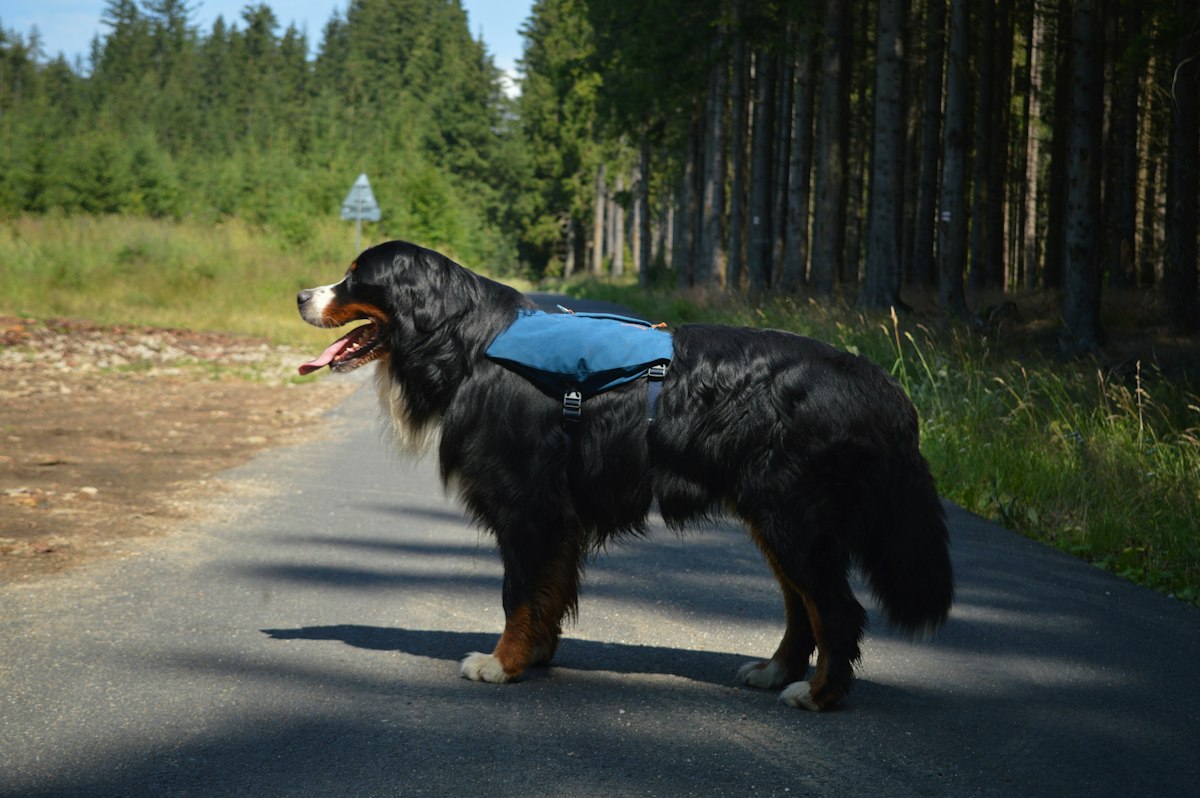
The Approach is the pack most long-time hikers already know by name, and for good reason: it’s been refined for over a decade and it shows in the details. It’s a saddlebag-style pack with two zippered main compartments plus smaller accessory pockets, a five-point adjustable harness, a metal leash attachment, and a padded grab handle for helping a dog over rocks or out of water. Reviewers consistently point to the heavy-duty stitching and taped seams holding up over years of trail use, not just a season.
It normally runs on the expensive side of this category, though it’s often discounted, and some owners note the harness takes a few tries to dial in the fit correctly the first time. For a dog over 80 pounds doing regular backcountry trips, it’s a fair trade for the durability at either price.
Pros:
- Taped seams and heavy-duty construction that reviewers report lasting years
- Five-point adjustable harness for a snugger fit than basic saddlebag designs
- Metal D-ring leash attachment and reinforced grab handle
Cons:
- Priciest option here at list price
- Takes some trial and error to get the harness adjustment right
Premium price tier, check current price.
2. Kurgo Big Baxter

The Big Baxter is Kurgo’s version sized for dogs 50 to 110 pounds (the regular Baxter tops out at 85 pounds and fits smaller frames), and it’s the pick here for anyone who wants to try out the concept of a dog backpack without spending premium money on it. It has eight adjustment points, a padded spine panel, reflective trim, and a 7.5-liter combined capacity across both panniers.
The materials are noticeably lighter-duty than the Ruffwear or Mountainsmith options, which is exactly why it costs less. For casual walks and the occasional day hike, that trade-off is fine. For dogs doing serious mileage every week, it’ll show wear faster.
Pros:
- Lowest price of the three
- Eight adjustment points for a genuinely custom fit
- Reflective trim for visibility on early morning or evening walks
Cons:
- Lower-grade materials than pricier packs
- Not built for heavy, frequent backcountry use
Budget price tier, check current price.
3. Mountainsmith K9 Dog Pack

Mountainsmith designed this one with input from a Colorado vet, and it shows in the fit logic: a four-point adjustable chest harness and an independently adjustable back harness let you dial in the chest and torso separately, which matters a lot for barrel-chested breeds. Mesh panels and perforated EVA foam against the dog’s body help with airflow, a real plus for thick-coated large breeds in warmer months. The Large size is built for dogs over 80 pounds.
At full price it lands in the middle of this group, and it’s frequently on sale, though sale pricing can change without notice. On-site reviews are limited in number but skew strongly positive; one recurring note is that the harness runs better for deep-chested dogs than compact, barrel-shaped ones.
Pros:
- Independent chest and back harness adjustment for a genuinely custom fit
- Mesh and perforated foam construction aids airflow in warm weather
- Vet-consulted sizing guidance for large breeds
Cons:
- Small review sample size compared to the other two picks
- Fit reportedly less ideal for compact, barrel-chested dogs
Mid-range price tier, check current price.
How to Choose a Dog Backpack
Weight capacity and your dog’s actual weight. Match the pack’s rated dog-weight range to your dog, not just to the liter capacity of the panniers. A pack rated for 50 to 110 pounds fits differently on a lean 55-pound dog than a stocky 100-pound one.
Chest and girth measurement, not just weight. Two dogs at 75 pounds can have very different chest girths depending on breed. Measure around the widest part of the ribcage before ordering, and check the brand’s sizing chart against that number instead of guessing from weight alone.
Adjustment points. More independent adjustment points on the chest and back mean a better shot at a fit that doesn’t chafe or slide, especially for dogs whose proportions don’t match a “standard” build.
Material and construction. Ripstop nylon and taped seams hold up to repeated trail use better than lighter fabrics. If your dog is doing weekly hikes, this matters more than it does for occasional neighborhood walks.
Ventilation. Thick-coated large breeds (Bernese mountain dogs, huskies, shepherds) overheat faster with a pack on. Mesh panels or perforated foam against the body help offset that in warm weather.
Safety and Maintenance Tips
Start with an empty pack for a few short walks so your dog gets used to the feel and weight distribution before you add anything to the panniers. Add weight gradually, checking after each walk for rubbing at the armpits, chest, or belly strap. Keep total pack weight (bags plus contents) at or under 25 percent of your dog’s body weight, and closer to 10 to 12 percent for dogs new to wearing one or working back from an injury. Skip the pack entirely on hot days for short-coated or brachycephalic dogs, or dogs with any heart or joint condition, without a vet’s go-ahead first. Rinse the panniers out after muddy or sweaty trips and let them air dry fully before the next use to avoid mildew, and check stitching and buckles periodically for wear.
Frequently Asked Questions
How much weight can my dog carry in a backpack?
Most vets suggest starting around 10 percent of body weight and building up gradually, with 25 percent as a general upper limit for a healthy, conditioned adult dog on a shorter outing. Puppies, seniors, and dogs with joint or heart issues should carry less or skip the pack, and it’s worth checking with your vet for a number specific to your dog.
What size backpack does my large dog need?
Measure your dog’s chest girth at the widest point and check it against the manufacturer’s size chart rather than going off weight alone, since two same-weight dogs can have very different builds. When a dog falls between sizes, sizing up and cinching down the adjustment straps usually works better than sizing down.
Can dogs wear backpacks in hot weather?
They can, with caution. Ventilated designs with mesh or perforated foam help, but on hot days it’s worth shortening the outing, carrying less weight, and watching closely for excessive panting or fatigue, especially in thick-coated breeds.
How do I get my dog used to wearing a pack?
Start with the empty pack indoors or in the yard for short stretches so it stops feeling novel, then move to short, easy walks with the empty pack before adding any weight. Most dogs adjust within a few outings; if a dog stays anxious well past that, it’s worth double-checking fit before assuming it’s just a temperament issue.
Which One Should You Buy?
If your large dog does regular backcountry or multi-day trips, get the Ruffwear Approach Pack in Large/X-Large.
If you mostly do day hikes and want to spend less, get the Kurgo Big Baxter.
If your dog runs hot or has an unusual build, get the Mountainsmith K9 Dog Pack in Large for its adjustable, ventilated fit.
Hiking in summer heat? A pack adds warmth, so see our cooling vests for large dogs before a hot-weather trip.
Get the free Big-Dog Gear Starter Checklist
The exact gear a large dog actually needs, with our #1 pick in every category, from bowls to GPS trackers. Enter your email and we’ll send the printable checklist straight to your inbox (plus the occasional big-dog gear guide, no spam).
Written by Sadie Dennis. Sadie researches and writes every guide on RankedShopping, focused on gear that holds up to big, strong dogs. Picks are chosen independently and updated as products change, no brand pays for placement.
A pack is one piece of the kit. Pair it with a well-fitted harness, boots for rough ground, and a life jacket if there is water on the route.