
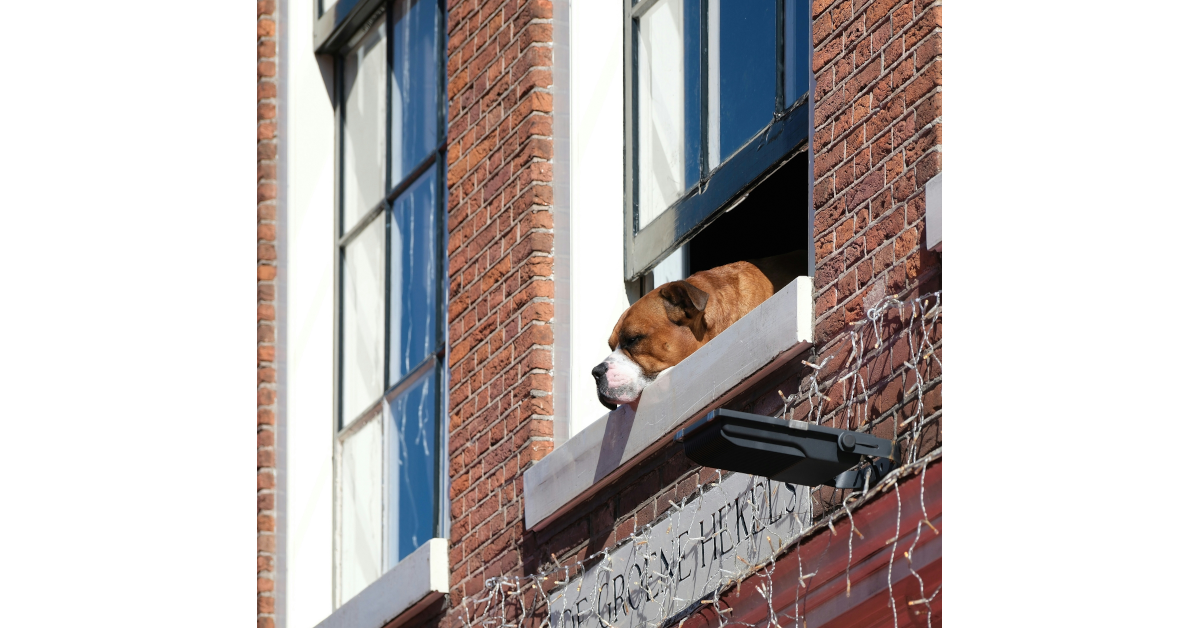
Keeping a big dog in an apartment comes down to four zones: a crate corner away from foot traffic, a line-of-sight rest spot with a supportive bed, one or two dedicated toy storage points with a rotation routine, and a gear station by the door for fast exits. You don’t need more square footage. You need the right layout. Here’s how to build each zone, in order.
This guide walks through a practical big dog apartment setup step by step: where to put the crate, how to place the bed, how to store toys, and how to build a routine that keeps your dog calm instead of bouncing off the walls.
Big Dog in an Apartment: Quick Layout Overview
Guide last updated: July 26, 2026.
Every floor plan is different, but a simple apartment setup for big dogs usually includes:
- Crate zone: against a wall, away from direct door drafts but close enough that your dog can see what’s going on.
- Bed / chill zone: a comfy spot in the main living area or bedroom where your dog can nap while you relax.
- Toy and enrichment corner: a basket or bin for chew toys, puzzle toys, and enrichment you rotate in and out.
- Leash and harness station: hooks or a small shelf near the door with your big dog’s walking gear ready to go.
Before you move anything, it helps to measure your dog and crate so you know exactly how much floor space you’re working with. If you haven’t already, start with these two guides:
Designing the Crate Zone
1. Choose the right room and wall
For most big dogs in apartments, the crate works best in either the living room or bedroom:
- Living room: good for social dogs who settle better when they can see you.
- Bedroom: ideal for nighttime if your dog sleeps in the crate and relaxes better near you.
Try to avoid:
- Putting the crate directly against loud shared walls (elevator, neighbor’s TV).
- Placing it in constant foot traffic where your dog will be bumped or stepped over.
- Jamming it next to doors that slam or drafty sliding doors.
If you haven’t chosen a crate yet, compare options in this guide: best dog crates for large dogs.
2. Make the crate comfortable, not cluttered
Inside the crate, aim for simple and safe:
- A supportive crate mat or pad that fits the floor space.
- One sturdy, safe chew toy if your dog can be trusted not to swallow pieces.
- Optional light cover (towel or crate cover) if your dog relaxes better in a den-like setup.
If your dog seems stiff after crate time, upgrade their sleeping surface. Our best dog beds for large dogs guide covers supportive options that can also fit in crates or next to them.
Setting Up the Bed and Chill Zone
Big dogs spend a lot of time napping. Your apartment setup should give them a chill zone outside the crate where they can stretch out and still feel close to you.
1. Pick a spot with line of sight
Place the bed where your dog can see the room, not in a dead corner they never visit. Good spots include:
- Next to the couch in the living room.
- At the foot or side of your bed in the bedroom.
- Near (but not blocking) a window where they like to watch the world.
Look for a spot that isn’t in the main walkway, so nobody is constantly stepping over or bumping into your dog.
2. Choose the right bed for a big dog
For large breeds, the bed matters more than the square footage of the apartment. You want:
- Supportive filling that doesn’t flatten instantly.
- Enough length for your dog to lie fully stretched out.
- Washable covers to handle drool, dirt, and accidents.
To narrow it down, compare picks in our best dog beds for large dogs roundup.
Creating a Toy and Enrichment Corner
In a small space, a messy toy explosion gets old fast. A dedicated toy corner keeps things tidy and helps your dog understand what’s okay to chew.
1. Use one or two toy storage spots
Set up:
- A sturdy basket or low bin in the living room for daily toys.
- A backup bin in a closet with “rotate in” toys to keep things fresh.
Rotate toys every few days so your dog doesn’t get bored. For power chewers, stick with tough options and skip flimsy plush toys unless they’re only used under supervision.
If you need help choosing durable options, see our guide to the best dog toys for aggressive chewers.
2. Build a simple enrichment routine
In an apartment, mental exercise matters as much as physical. Try:
- One puzzle toy or food-stuffed toy for quiet time each day.
- Short, 5–10 minute training sessions in the hallway or living room.
- Hide-and-seek games with treats around the apartment.
These don’t take much space, but they help your big dog settle better when it’s time to relax.
A durable-toy subscription such as Super Chewer keeps the rotation fresh and ships big-dog-tough toys to your door, handy when a bored apartment dog burns through them fast.
Leash, Harness, and Walking Station
Because big dog apartment living relies on walks instead of a yard, your walking gear should be easy to reach and fitted correctly.
1. Pick a wall by the door
Install a small hook rail, shelf, or command hooks near your main exit for:
- Primary leash
- Backup leash
- Harness and/or collar
- Poop bag dispenser
This keeps leashes off the counter and makes it easier to get out the door smoothly, which your neighbors will appreciate when your big dog is excited for a walk.
2. Use gear that gives you control in tight spaces
Elevators, stairwells, and narrow hallways are a fact of apartment life. A well-fitted harness and a solid leash make those moments more controlled.
- Compare options in our best dog harnesses for large dogs guide.
- Pair it with a leash from our best dog leashes for large dogs roundup.
When you’re working in tight shared spaces, it’s also worth practicing calm hallway and elevator manners with a pocket of treats.
Noise, Neighbors, and Big Dog Etiquette
In an apartment setup for big dogs, part of the “layout” is your noise strategy. Barking at hallway sounds, doors, and elevators can create stress for you and your neighbors.
- Keep your dog’s main rest areas slightly away from shared walls, if possible.
- Use rugs and runners to soften sound (and give your dog traction on slippery floors).
- Mask hallway noise with a fan or low TV if your dog is sound-sensitive.
The American Kennel Club also shares helpful tips on preparing dogs for apartment life, including exercise and managing noise in close quarters. See their article on moving to an apartment with your dog for more ideas.
Sample Floor Plan Ideas for Big Dog Apartments
Studio apartment
- Crate: along the longest wall, away from the entry door.
- Bed: between your human bed and living area, so your dog can see both.
- Toy bin: beside the couch or TV stand.
- Leash station: hooks behind the door or next to a shoe rack.
One-bedroom apartment
- Crate: in the bedroom or living room, depending on where your dog sleeps best.
- Bed: in the living room near where you sit most of the time.
- Toy bin: by the couch, plus a secondary bin in the bedroom if your dog naps there.
- Leash station: small hook rail near the front door with harness and poop bags.
Use painter’s tape to mark out the crate footprint and bed footprint before you commit. Once you see how much space they take, it’s easier to adjust furniture around them.
Daily Routine for a Big Dog in an Apartment
The best apartment setup for big dogs is only as good as the routine you run through it. A simple daily structure might look like this:
- Morning potty break and walk (sniff-heavy, not just a quick loop).
- Breakfast, plus 5–10 minutes of training or puzzle toy time.
- Crate rest or chill time on the dog bed while you work.
- Midday potty break and short play session.
- Afternoon or evening walk with some training and decompression time.
- Evening chill on the dog bed while you relax.
Adjust the length and intensity of walks based on your dog’s breed, age, and health. If you’re ever unsure whether your dog is getting enough movement, a conversation with your vet or a qualified trainer is a good next step.
Frequently Asked Questions
Is it okay to keep a big dog in an apartment?
For many large breeds, an apartment is fine as long as their exercise, mental stimulation, and social needs are met. Some big dogs are actually calmer indoors than high-energy small dogs. The key is a realistic walking and enrichment plan, plus a layout that lets them rest comfortably. Still deciding on a breed? See our guide to large dog breeds that do well in apartments.
Where should I put the crate in an apartment?
Most people choose the living room or bedroom, depending on where the dog relaxes best. Avoid tight corners right next to noisy shared walls or doors that slam. For help with crate sizing and time limits, see:
How many beds does a big dog need in an apartment?
At minimum, most big dogs do well with one main bed in the living room and a comfortable surface in the crate if they use one regularly. Some families also add a second bed in the bedroom so the dog can sleep closer to them overnight.
What’s the best way to handle toys in a small space?
Keep one basket of daily toys accessible and store extras in a closet. Rotate toys every few days to keep them interesting and rely on durable options if your dog is a heavy chewer. For ideas, check out our best dog toys for aggressive chewers guide.
Final Thoughts
You don’t need a giant house to make a big dog comfortable. With a thoughtful apartment setup for big dogs (crate in the right spot, a supportive bed, organized toys, and a tight walking routine), your dog can relax, sleep, and play in a way that works for both of you.
If you’re still dialing in your big dog’s gear, these guides can help you finish the setup:
- Best dog crates for large dogs
- Best dog beds for large dogs
- Best dog harnesses for large dogs
- Best dog leashes for large dogs
- All Dog Gear guides
Start with a simple layout, watch how your dog actually uses the space, and tweak from there. Your apartment will feel calmer, and your big dog will have clear spots to rest, play, and recharge.
Want eyes on the setup while you’re out? A camera with a treat dispenser turns midday check-ins into training moments. See the best dog cameras for large dogs.
Apartment dogs need their exercise concentrated into fewer, harder sessions. An automatic launcher helps on days you cannot get to the park: see the best automatic ball launchers for large dogs.
For zoning a flat without shutting your dog in a room, a tall gate is usually better than a closed door. See the best dog gates for large dogs.
If your dog needs garden access while you are out, a dog door beats waiting by the back door. See the best smart dog doors for large dogs.
Get the free Big-Dog Gear Starter Checklist
The exact gear a large dog actually needs, with our #1 pick in every category, from bowls to GPS trackers. Enter your email and we’ll send the printable checklist straight to your inbox (plus the occasional big-dog gear guide, no spam).