

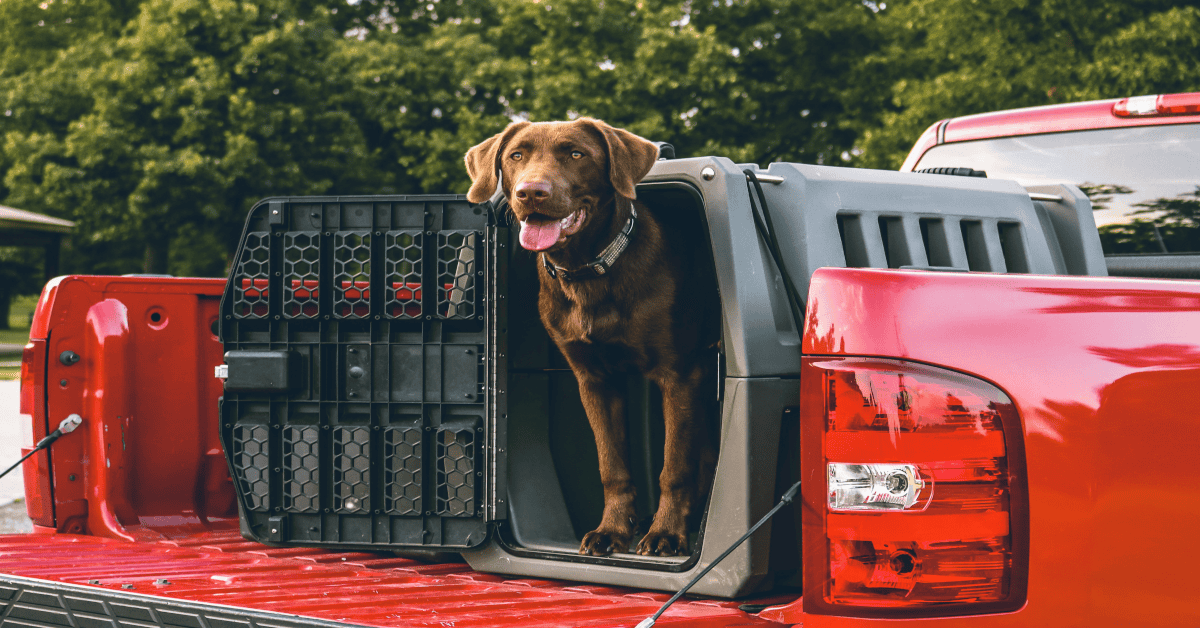
The best dog crate for large dogs is the MidWest Homes 42-inch two-door iCrate: affordable, proven, and correctly sized for most large breeds. Escape artists need the BOLDBONE heavy-duty crate, and the New Age Pet ECOFLEX is the furniture-style pick that doubles as an end table. Two more picks round out the lineup: the Petmate kennel for air travel, and the EliteField soft crate for owners who need something that folds down for the car or a trip. Sizing steps and crate safety tips below.
As an Amazon Associate we earn from qualifying purchases. This post contains Amazon affiliate links; if you click and buy, we may earn a small commission at no extra cost to you. See our Disclosures page for details.
Top picks at a glance
- MidWest Homes 42-Inch Two-Door iCrate: best overall for most large dogs
- BOLDBONE Heavy Duty Crate: best for escape artists and crate-breakers
- New Age Pet ECOFLEX InnPlace: best furniture-style crate
- Petmate Large Breeds Dog Kennel: best for air travel
- EliteField 3-Door Soft Crate: best soft-sided/portable
We’ll also cover how to pick the right crate size, what features matter most for big dogs, and a few simple crate training tips to keep things safe and low-stress.
You can also browse all of our big-dog product roundups on the main Dog Gear page.
Prices last verified: August 27, 2026.
Not sure what length to start with? Our large dog breed weight chart lists typical crate sizes by weight class.
| Crate | Best for | Rating | Price | Check price |
|---|---|---|---|---|
| MidWest 42-Inch Two-Door iCrate | Best overall for most large dogs | ★★★★★ 4.6/5 | ~$60 | Check price → |
| BOLDBONE Heavy Duty Crate | Best for escape artists and crate-breakers | ★★★★★ 4.4/5 | ~$350 | Check price → |
| New Age Pet ECOFLEX InnPlace | Best furniture-style crate | ★★★★ 4.3/5 | ~$300 | Check price → |
| Petmate Large Breeds Kennel | Best for air travel | ★★★★★ 4.5/5 | ~$189.99 | Check price → |
| EliteField 3-Door Soft Crate | Best soft-sided/portable | ★★★★★ 4.5/5 | ~$89.99 | Check price → |
Best Dog Crates for Large Dogs: Top Picks
- Best Budget Wire Crate: MidWest Homes for Pets 42-Inch Two-Door iCrate – great starter crate with divider panel and leak-proof tray.
- Best Heavy-Duty Crate: BOLDBONE Heavy Duty Indestructible Dog Crate – escape-proof design for powerful or high-anxiety large dogs.
- Best Furniture-Style Crate: New Age Pet ECOFLEX InnPlace Dog Crate & End Table – good-looking crate that doubles as furniture.
Best Dog Crates for Large Dogs
1. MidWest Homes for Pets 42-Inch Two-Door iCrate (Best Budget Wire Crate)
The MidWest 42-Inch Two-Door iCrate is a solid starting point if you’re looking for an affordable, practical crate for a large dog. It’s made from metal wire with a secure latching system, a removable leak-proof tray, and a divider panel so you can adjust the interior space as your dog grows.
This crate is ideal for friendly, non-destructive large dogs who simply need a safe place to relax or sleep. The two-door design also makes it easier to place in tight spaces or smaller rooms.
If you want your crate to double as a comfortable sleep space, pair it with one of the options from our guide to the best dog beds for large dogs.
- Best for: Large dogs who are crate-trained or easygoing; puppies who will grow into a large crate.
- Type: Folding wire crate with divider and plastic tray.
- Size example: 42-inch length works well for many Labs, Goldens, Boxers, and similar breeds (always measure your dog; see sizing guide below).
Pros:
- Great value for the price and widely available.
- Divider panel lets you adjust the space for growing puppies.
- Two doors give you flexibility in where you place the crate.
- Folds flat for storage or travel.
Cons:
- Not designed for serious chewers or escape artists.
- Wire crates can be noisy if your dog moves around a lot.
2. BOLDBONE Heavy Duty Indestructible Dog Crate (Best Escape-Proof Crate)
If your dog treats normal wire crates like a logic puzzle, the BOLDBONE Heavy Duty Indestructible Dog Crate is built for you. This crate uses thick, reinforced steel bars, heavy-duty hardware, and a secure locking system to handle strong, high-anxiety, or determined escape artists.
It includes removable wire trays for easier cleaning and sturdy wheels so you can roll the crate instead of dragging it across the floor. The design is overkill for calm dogs, but for certain large breeds it can be the difference between chaos and peace.
- Best for: High-anxiety or escape-prone large dogs; powerful chewers.
- Type: Heavy-duty steel crate with locking doors, trays, and wheels
- Size example: Available in 38–54 inch lengths for large and giant breeds.
Pros:
- Extremely strong, escape-resistant construction.
- Locking wheels make it easier to move without lifting.
- Removable trays simplify cleaning after accidents or spills.
- Good choice for dogs who have already broken lighter crates.
Cons:
- Significantly heavier and bulkier than standard wire crates.
- More expensive than basic crates (but cheaper than replacing multiple broken ones).
3. New Age Pet ECOFLEX InnPlace Dog Crate & End Table (Best Furniture-Style Crate)
Not a fan of the “metal cage” look? The New Age Pet ECOFLEX InnPlace Dog Crate & End Table is a crate that blends into your décor. It’s made from a durable ECOFLEX composite that won’t warp, crack, or split like some wood crates, and it doubles as an end table so you don’t lose floor space in your living room or bedroom.
This crate is best for calm, crate-trained dogs who aren’t trying to chew or claw their way out. It offers good airflow, a secure latch, and a more “furniture-like” appearance than metal crates.
- Best for: Well-behaved, crate-trained large dogs; owners who want a crate that looks like real furniture.
- Type: Indoor furniture-style crate and end table made from ECOFLEX composite.
- Size example: Large and XL sizes for many big breeds.
Pros:
- Blends into living spaces better than metal crates.
- ECOFLEX material is resistant to moisture and cracking.
- Works as both a crate and a functional end table.
Cons:
- Not suitable for heavy chewers or escape-prone dogs.
- More expensive than basic wire crates.
4. Petmate Large Breeds Dog Kennel (Best for Air Travel)
The Petmate Vari Kennel line has been the standard airline-compliant crate for decades, and this Large Breeds version is built for it — a hard-sided plastic shell rated to 90 lbs that meets most airline cargo specifications, with ventilation on three sides so your dog isn't sealed into a box for a flight.
This is the pick if you actually need to fly with your large dog, or just want a hard-sided crate that's easier to hose out and disinfect than wire or fabric. It's not the pick for everyday home use if floor space or a decorative look matters to you — it looks and feels like a travel kennel because that's what it is.
- Best for: Owners who fly with their dog, or want an easy-to-clean hard-sided crate.
- Type: Hard-sided plastic airline-compliant travel kennel.
- Size example: 40″ L x 27″ W x 30″ H, rated up to 90 lbs.
Pros:
- Meets most airline cargo specifications for flying with a large dog
- Hard plastic shell is easy to clean and more chew-resistant than fabric
- 7,838 reviews averaging 4.5 stars — among the best-reviewed picks on this page
Cons:
- Bulkier and heavier to move around the house than a wire crate
- Less airflow than a wire crate, which matters more in warm climates
5. EliteField 3-Door Soft Dog Crate (Best Soft-Sided/Portable Crate)
None of the other picks on this page fold flat. The EliteField's steel-tube frame and 600D fabric cover set up and collapse in seconds without tools, and it packs into its own carrying bag — the pick for a dog who's already crate-trained and just needs something that travels well, rather than a permanent home base.
At 36″ L x 24″ W x 28″ H, it's sized for large dogs but not the biggest breeds — measure your dog against this size before assuming it fits, since it's smaller than the 42″ MidWest pick above. It's not built to contain a determined chewer or escape artist; for that, see the BOLDBONE pick instead.
- Best for: Crate-trained large dogs who travel, or owners who need a crate that folds away when not in use.
- Type: Soft-sided, collapsible steel-frame crate with a carrying bag.
- Size example: 36″ L x 24″ W x 28″ H.
Pros:
- Sets up and folds flat in seconds, no tools required
- Three mesh doors (top, front, side) for airflow and easy access
- 13,105 reviews averaging 4.5 stars, and the cheapest pick on this page at $89.99
Cons:
- Not chew-proof or escape-proof — skip this for dogs with anxiety or a habit of scratching at doors
- At 36″ long, it's smaller than the MidWest and BOLDBONE picks, so measure your dog first
How to Choose the Right Dog Crate Size
Picking the right size is just as important as picking the right crate. A crate that’s too small is uncomfortable and unfair; one that’s too big can make potty training harder and may not feel cozy or secure. If a crate is just one item on a longer list, the Big Dog Gear Finder can build out the rest based on your dog’s weight and situation.
Step 1: Measure your dog
- Length: Measure from the tip of your dog’s nose to the base of their tail (not the tip). Add about 2–4 inches.
- Height: Measure from the floor to the top of your dog’s head or ears while they’re standing naturally. Add about 2–4 inches.
Use these measurements to compare against the manufacturer’s crate sizing chart. For many large dogs, a 42-inch crate is a good starting point, but giant breeds may need 48–54 inches.
For a deeper dive into getting each measurement right, follow our step-by-step guide on how to measure a dog for a crate, bed, and harness.
Step 2: Consider your dog’s age and habits
- Puppies: Choose a crate that will fit their adult size and use a divider panel to shrink the space while they’re still growing. This helps with house training.
- Adults: If your dog likes to stretch out, lean toward the larger size in a range. If they curl up tightly, a slightly smaller crate can feel cozier.
- Chewers & escape artists: Prioritize build quality and bar thickness over looks. The BOLDBONE is a better choice than a basic wire crate here.
Crate Training & Safety Tips for Large Dogs
Even the best dog crates for large dogs only work well if they’re used safely.
For an in-depth, step-by-step walkthrough of crate training, the American Kennel Club crate training guide is a great reference alongside the tips below.
- Introduce the crate slowly. Let your dog explore with the door open. Reward them with treats and praise for going inside on their own.
- Make it comfortable. Add a durable crate mat or bed that fits the base, plus a favorite toy for chewing.
- Don’t use the crate as punishment. Your dog should see it as a safe den, not a “time-out” corner.
- Limit crate time. Adult dogs generally shouldn’t be crated longer than 4–6 hours at a time, and puppies need even shorter stretches.
- Remove collars and harnesses. This reduces the risk of tags or straps getting caught in the crate.
- Check hardware regularly. For large dogs, inspect latches, bars, and corners occasionally to make sure nothing has bent or loosened.
Dog Crate FAQ
Is a 42-inch crate big enough for my large dog?
For many large breeds like Labradors, Golden Retrievers, and Boxers, a 42-inch crate is a good fit, but it’s not universal. Always measure your dog’s length and height, then compare those measurements to the crate’s internal dimensions. If your dog can stand up, turn around, and lie down comfortably without hunching, you’re in the right size range.
Wire, plastic, or furniture-style crate – which is best?
Wire crates are versatile and well-ventilated, plastic crates can feel more den-like and are popular for travel, and furniture-style crates look better in living spaces but are only suited for calm, crate-trained dogs. For most large dogs at home, a sturdy wire crate or heavy-duty steel crate is the most practical starting point.
Can I use a dog crate for house training?
Yes. Crates can be a useful tool for house training when used correctly. The crate should be just big enough for your dog to stand, turn, and lie down comfortably. If it’s too large, puppies may use one side as a bathroom. Combine crate time with a consistent potty schedule and plenty of supervised time outside the crate.
How long can a large dog stay in a crate?
Crates are meant for short-term management and downtime, not all-day confinement. Most adult dogs shouldn’t stay crated more than 4–6 hours at a stretch on a regular basis. Puppies and senior dogs need more frequent breaks. If you’ll be gone longer than that, look into a pet sitter, dog walker, or doggy daycare instead. See our full guide on how long a dog can stay in a crate for age-by-age and bladder-control specifics.
Do I need a cover on my dog’s crate?
Some dogs relax more easily with a crate cover that blocks visual distractions and makes the space feel den-like, while others prefer open visibility. If you use a cover, make sure there’s still plenty of airflow and that your dog doesn’t overheat. Never fully cover a crate in hot weather or with a heavy blanket.
Crate Measuring Formulas (Quick Reference)
Two measurements with your dog standing naturally give you the right crate size:
- Length: tape from the tip of the nose along the spine to the base of the tail (not the tip). Add 4 inches for most adult large dogs, or 6 inches for extremely large or long-backed breeds. Crate length = body length + 4–6″.
- Height: from the floor next to a front paw straight up to the top of the head (or ear tips if they stand upright). Add 2–4 inches of headroom. Crate height = body height + 2–4″.
- Width: no need to measure. Brands standardize width in proportion to length.
For puppies, buy for expected adult size and use a divider panel. Airline travel has its own stricter requirements. Check your carrier’s rules before buying.
Get More Big-Dog Gear Guides
If you found this guide on the best dog crates for large dogs helpful, you’ll probably like our other big-dog gear picks, too. We review beds, toys, and more with large breeds in mind and send occasional updates when new guides go live.
Looking for more big-dog gear? Check out our guides to the best dog toys for aggressive chewers, the best dog beds for large dogs, and (to keep an eye on crate time) the best dog cameras for large dogs. If you're working with a smaller home, our big dog apartment setup guide covers crate, bed, and toy layout that works in tight spaces.
Drop your email below to get future big-dog gear reviews and tips:
Crate training travels badly to the car, where a crate is often impractical. For journeys, see the best dog car barriers and cargo liners for large dogs.
If you would rather give your dog a room than a crate, a tall gate does the same job with more space. See the best dog gates for large dogs.
Get the free Big-Dog Gear Starter Checklist
The exact gear a large dog actually needs, with our #1 pick in every category, from bowls to GPS trackers. Enter your email and we'll send the printable checklist straight to your inbox (plus the occasional big-dog gear guide, no spam).

Written by Sadie Dennis. Sadie researches and writes every guide on RankedShopping, focused on gear that holds up to big, strong dogs. Picks are chosen independently and updated as products change; no brand pays for placement.